
Key Takeaways
Ethiopia seeks a port on the Red Sea: Large but landlocked, Ethiopia has long sought ownership of a port on the Red Sea coast, arguing that this is a historical right and essential to its prosperity and development.
The push for port access risks a regional conflict: Prime Minister Abiy Ahmed’s renewed drive for a seaport or naval base, through diplomacy or force, risks sparking conflict with Ethiopia’s neighbors and dismantling a key 2018 peace deal.
Domestic issues are driving Ethiopia’s calculus: Abiy appears to be motivated by the need to deflect criticism over domestic conflicts and an economic crisis, as well as the growing influence of external powers along the Red Sea coast.
Compromise is possible: While Ethiopia needs to diversify its maritime access, ownership of a seaport is not essential to this end. Negotiated deals with its neighbors could enhance its access to the sea without destabilizing the region.
In October 2023, Ethiopian Prime Minister and Nobel Peace Prize laureate Abiy Ahmed made an announcement that shocked his country’s neighbors. Citing historical rights, national prestige, and economic necessity, he declared that Ethiopia must acquire its own port on the Red Sea. “If this is not going to happen, there will be no fairness and justice,” he said in the televised address, “and if there is no fairness and justice, it’s a matter of time, we will fight.”1
Ethiopia is the most populous landlocked country in the world. Lacking access to the sea, it has periodically revived claims to a Red Sea port, based on three main arguments: historical and legal rights; the imperatives of national development; and the country’s international standing. According to the Ethiopian premier, the lack of a maritime harbor “[prevents] Ethiopia from assuming its place in Africa.”2
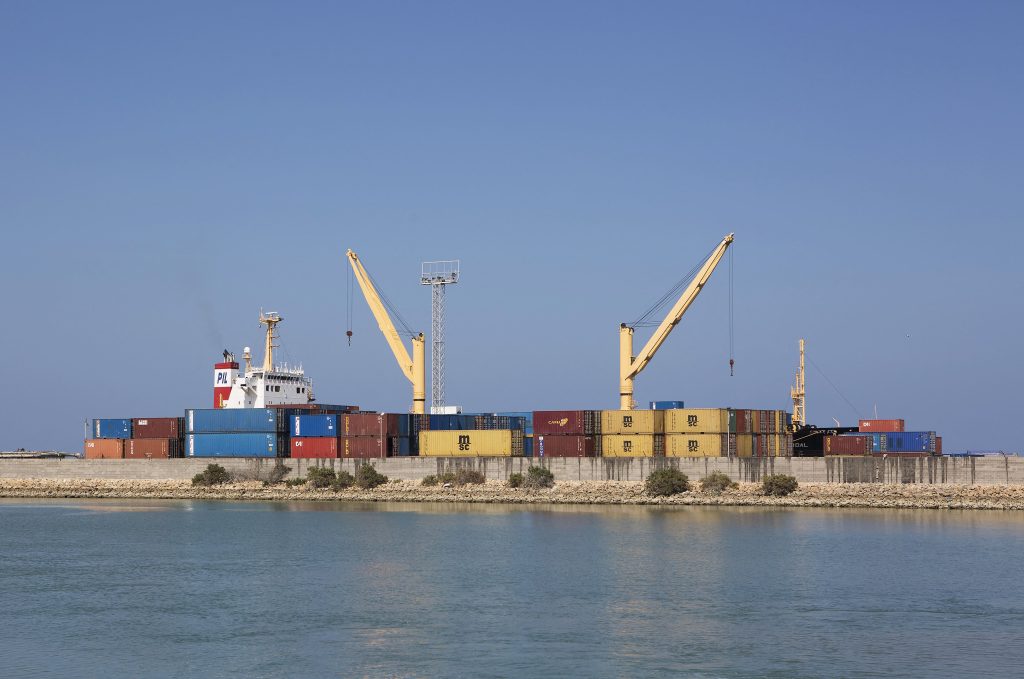
Currently, Ethiopia relies heavily on the Port of Djibouti, which accounts for more than 95% of its exports and imports.3 This reliance costs the country over $1 billion a year in fees—a price the cash-strapped nation can ill afford.4 Its heavy reliance on a single port has already pushed Addis Ababa to seek out alternatives. In January 2024, Ethiopia reached a controversial deal with Somaliland to access the Berbera port for commercial and naval uses, stoking tensions with the federal government of Somalia.5
Ethiopia, with a population of 127 million people,6 is separated from Eritrea’s Red Sea port of Assab by a band of territory approximately 60 kilometers (37 miles) across. Yet, only six years after formally ending his country’s two-decade conflict with Eritrea and Somalia—in a landmark peace agreement that won him the Nobel Peace Prize—Abiy, through his speech, has sparked fears about regional instability.
Ethiopia’s coastal neighbors—Somalia, Eritrea, and Djibouti—responded to his speech with a mix of concern and rejection.7 Two weeks later, Abiy toned down the rhetoric, telling troops that “Ethiopia will not pursue its interests through war. We are committed to [promoting] mutual interest through dialogue and negotiation.”8
However, his quest for a port came in the wake of a ruinous war in the Tigray region, a domestic economic crisis, and Ethiopia’s existing tensions with its neighbors—some of which were already wracked by other conflicts. In doing so, Abiy has added another layer of complexity to the Horn of Africa’s geopolitics. Indeed, his move threatens to deepen fissures on several fronts and create new ones.
Navigating these issues will require careful diplomacy that addresses the concerns of all parties. This issue brief analyzes the rationale behind Abiy’s renewed quest for a seaport in light of the struggle for control of the Red Sea, domestic factors, and the shifting geopolitics of the region, exploring how the standoff could be mitigated or resolved.
Historical Claims and a “Geographical Prison”
When Prime Minister Abiy Ahmed announced his quest for a port in October 2023, he turned to maps dating back to the third-century kingdom of Aksum to back up Ethiopian territorial claims to Red Sea ports on what is now Eritrean territory.9 While Ethiopia’s leaders have hailed the country’s purported 3,000 years of continuous history across a territory stretching to the coast,10 the reality is more complicated. What is today the Eritrean coastline was controlled for three centuries by the Ottoman empire before falling into the hands of Egypt, which had a presence at the key port of Massawa from 1865 through the mid 1880s.11
Under the 1884 Hewett Treaty between Ethiopia, Egypt, and Britain, Ethiopia was guaranteed “free access to the port of Massawa.”12 The following year, however, the port fell under Italian occupation,13 which lasted until the British gained control in 1941 and administered it until 1952.14 Emperor Haile Selassie I, who ruled Ethiopia for more than four decades starting in 1931, later laid claim to former Italian Somaliland and what is today Eritrea based on purported historical ties.15
As the United States (U.S.) emerged as a leading world power following World War II, Ethiopia’s status as a key U.S. ally encouraged Washington to back its claims to Eritrea, which it annexed.16 This finally placed it in possession of a seaport.17 Yet while Ethiopia saw Eritrea as a lost territory rejoining its mother country,18 Eritreans argued that it was a violation of their rights to decolonization and self-determination.19 By 1991, Eritrea’s war of independence had left Ethiopia without direct access to the sea.20
Two decades later, with a growing population and a struggling economy, Ethiopia’s government finds the status quo unacceptable. As Abiy argued in his October speech: “By 2030 [the population of Ethiopia] will be 150 million … A population of 150 million can’t live in a geographic prison.”21
The Scramble for the Red Sea
The question of who controls the Red Sea is at the heart of geopolitics in the surrounding region. Cold War-era rivalries over one of the world’s most sensitive waterways motivated several powers to establish naval bases in the Red Sea. The U.S. established such positions at the port of Berbera, while the Soviet Union established rival bases at ports and islands belonging to Eritrea.22
Following the end of the Cold War, the region saw the rise of multiple new actors, including the Gulf states. Diverging interests among the Gulf countries further complicated inter-state relationships in the region, particularly with regard to seaports.23
Indeed, Ethiopia’s foreign policy has been partly driven by concerns about Red Sea control and certain Arab states’ influence there. Its alignment with Israel24 has been dictated partly by its drive to deter Arab states involved in power projection in the Red Sea. Eritrea and its fight for independence thus became pawns in the struggle for control over the Red Sea. While Ethiopia aligned itself with U.S. and Israeli interests, many Arab states supported Eritrean independence fighters.25
The membership of Sudan, Djibouti, and Somalia in the League of Arab States has further deepened Ethiopia’s perception of a threat from these countries.26 The creation of the Saudi-led Council of Arab and African Littoral States of the Red Sea and Gulf of Aden in January 2020, excluding Ethiopia, cemented this perception.27 This appears to have been one factor triggering Ethiopia’s renewed quest to acquire a port and establish a military presence on the coast to boost its position in the scramble for control of the Red Sea.
The United Arab Emirates, through the Dubai-based companies DP World and P&O Ports, has been one of the most active investors in seaports in the Horn of Africa.28 The presence of various foreign military bases, particularly in Djibouti and Somalia, also has a clear impact on Ethiopia’s strategic calculus. Abiy has repeatedly asked why Ethiopia should not establish a naval base in the Horn when forces from distant countries have been able to do so.
Today, Ethiopia is seeking to establish a naval base in Somaliland, on the coast of the Gulf of Aden. The two actors signed a memorandum of understanding in January, in which Somaliland agreed to lease part of its coast to Ethiopia for naval and commercial uses.29 In return, Addis Ababa promised an “in-depth assessment” on recognizing the breakaway region’s statehood.30 It would be the first country to do so.
The announcement prompted a vehement condemnation from Somalia’s federal government, which sees Somaliland as an integral part of its territory. Indeed, the deal risks not only sparking a conflict between Addis Ababa and Mogadishu but also empowering Al-Shabab jihadists.31
While the exact location of the planned base is unclear, such a move would also give Ethiopia influence over the Red Sea and one of the most crucial chokepoints for world maritime traffic, furnishing it with significant geopolitical leverage and boosting its ambitions for global influence.32 It could also put other Red Sea countries, such as Egypt, Sudan, Eritrea, Djibouti, Somalia, Saudi Arabia, and Yemen, at a disadvantage.