
30th September 2026
Executive Summary
Renewed fighting in northern Ethiopia reflects the breakdown of the political settlement created by the 2022 Pretoria Agreement, but the formation of a seven-group armed alliance has widened the challenge facing Prime Minister Abiy Ahmed’s government. The Tigray People’s Liberation Front, Amhara Fano and Oromo armed movements retain deep territorial and political differences, yet they can now reinforce pressure across several regions and force the federal government to divide military and administrative capacity. Federal institutions remain stronger than any individual opponent, and the alliance currently lacks the command structure and political cohesion required for a national takeover. The greater risk is prolonged multi-front attrition, particularly if opposition forces threaten Ethiopia’s main trade corridors or attract defections from the federal security system.
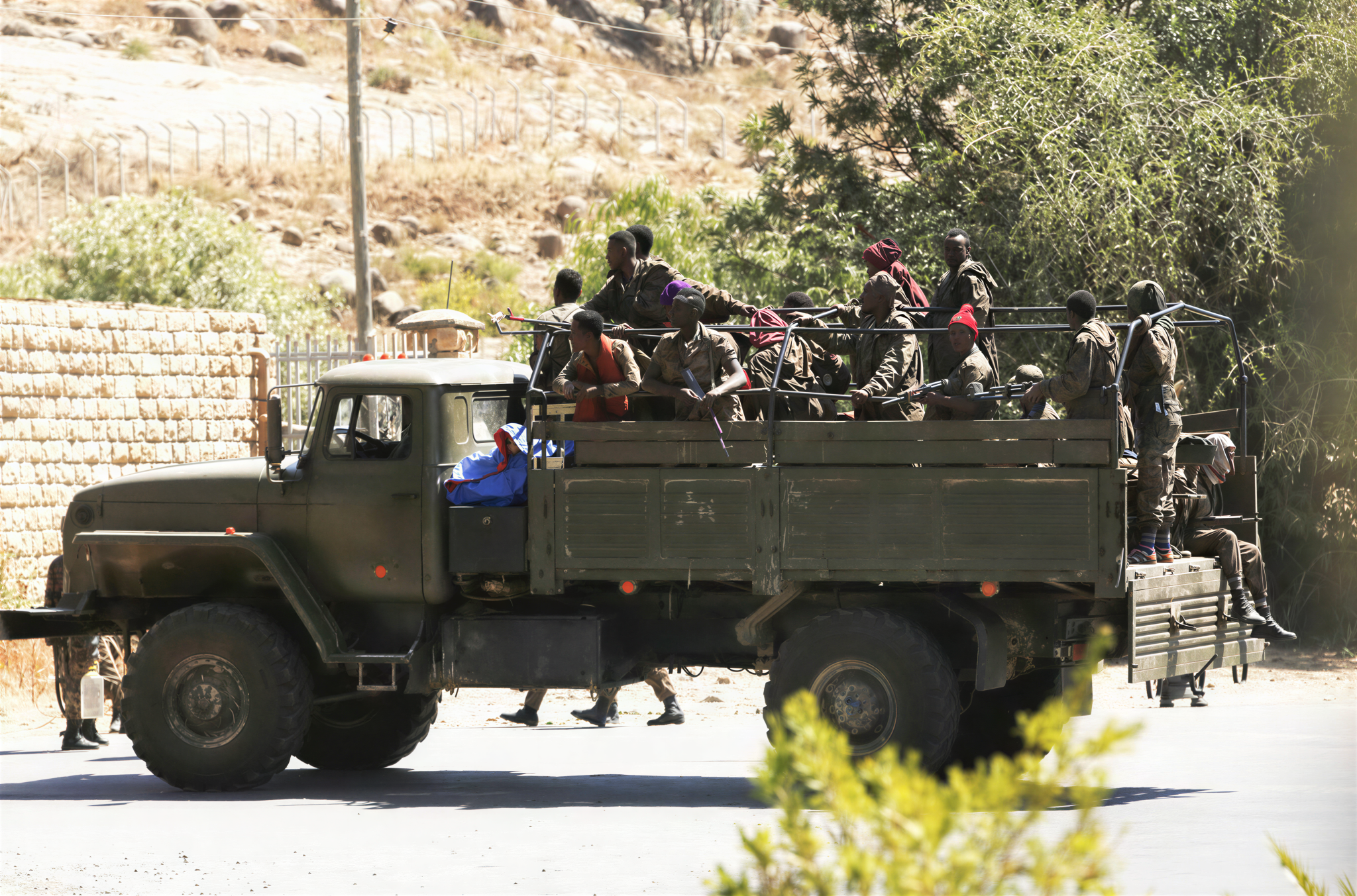
The Ethiopian Peoples’ Forces Alliance for Survival was announced on 20 September, bringing together the Tigray People’s Liberation Front (TPLF), Amhara Fano National Movement (AFNM), Oromo Liberation Army (OLA) and four smaller armed organisations. Within days, Tigrayan forces seized the airports at Mekelle, Axum and Shire and expanded operations into Afar and Amhara. Federal-aligned forces subsequently recovered Alamata, while fighting continued around southern Tigray and Afar. The sequence shows that the alliance emerged alongside a prepared military escalation. Its immediate importance lies in linking conflicts that the federal government had previously managed as separate regional security problems.
The return to war followed the progressive failure of the Pretoria Agreement to resolve the issues that had driven the previous conflict. Western and Southern Tigray remained disputed, around three-quarters of a million displaced people had still not returned home, and disarmament of Tigrayan forces remained incomplete. Tigray was excluded from the June 2026 federal election, while the relationship between the TPLF and the federally recognised interim administration deteriorated further. In May, the TPLF restored its pre-war regional legislature and returned Debretsion Gebremichael to the regional presidency, creating a rival centre of authority to Lieutenant General Tadesse Worede’s interim administration. Pretoria continued to provide a ceasefire framework, but its political bargain had lost much of its practical authority.
The alliance formed because several armed movements with different grievances increasingly identified the same federal government as the principal obstacle to their objectives. Fano fought alongside federal forces against the TPLF during the 2020–2022 war, but its relationship with the government collapsed after disputes over regional security forces, territorial claims and the post-Pretoria settlement. The OLA remained active in Oromia over separate questions of autonomy, representation and state structure. The TPLF entered the post-war period with reduced political influence and growing frustration over territorial restoration and its exclusion from federal politics. These movements have therefore converged around opposition to Abiy’s government without resolving their own disputes.
Tigrayan and Amhara actors continue to hold incompatible claims over Western Tigray. The TPLF and OLA favour strong ethnically based regional authority, while sections of Fano politics have opposed the existing federal model. Fano and Oromo armed groups also continue to clash in parts of western Oromia. The Ogaden National Liberation Front is divided over participation in the coalition, and no unified military commander has been announced. The alliance’s strength therefore comes from simultaneity: Tigrayan forces can sustain a conventional northern front, Fano can disrupt federal control across Amhara, and the OLA can keep forces committed in Oromia. The federal government must manage the combined burden even when the groups themselves remain politically fragmented.
The coalition’s declared objective is removal of the Prosperity Party government and establishment of a transitional administration, but its current military posture points towards pressure on federal authority before a direct attempt to seize national power. Tigrayan operations have concentrated on consolidating control inside Tigray, securing approaches through Amhara and Afar, and improving access to supply routes. A sustained offensive towards the federal capital would require unified command, durable TPLF–Fano cooperation, much deeper OLA participation, long and secure logistics, and protection against the Ethiopian National Defence Force’s (ENDF) expanded drone capability. Large-scale defections from the ENDF or regional security forces would also be needed to alter the current balance quickly. None of those conditions is yet evident.
The more immediate strategic vulnerability lies in Ethiopia’s economic geography. Fighting in Afar brings armed forces closer to infrastructure connected to the Djibouti corridor, which carries most of Ethiopia’s imported fuel, food, industrial inputs and external trade. Disruption of that route could create national economic pressure without requiring opposition forces to hold the federal capital or other major cities. The government would then have to protect its principal trade lifeline while sustaining operations across Tigray, Amhara and Oromia. For the alliance, pressure on transport corridors offers a more credible route to increasing federal costs than concentrating forces for a long-distance urban offensive.
The regional environment gives Ethiopian armed actors more external options than during the previous Tigray war. Eritrea has moved from military partner of the federal government to its most consequential regional adversary. Relations deteriorated after Eritrea was excluded from Pretoria and as Ethiopia revived demands for reliable access to the Red Sea, including discussion of the Eritrean port of Assab. Independent analysis has identified tactical contacts between Eritrea, TPLF elements and Fano, although the scale of material support remains unclear. Eritrea benefits strategically from an Ethiopia consumed by internal conflict because that reduces federal capacity to sustain pressure over maritime access.
Egypt also has reasons to constrain Ethiopian power through its dispute over Nile governance and increasingly close relationship with Eritrea, but direct Egyptian support for the new alliance remains unverified. Sudan matters more through geography, armed networks and possible western supply routes, including links between Tigrayan fighters and the Sudanese Armed Forces. The United Arab Emirates (UAE), by contrast, has publicly backed Ethiopia’s constitutional order, sovereignty and territorial integrity. The UAE remains one of Abiy’s most important Gulf partners, and there is no current evidence of a political break between them. Israel sits further outside the immediate conflict: its recognition of Somaliland and security interests around the Red Sea affect Ethiopia’s regional environment, but the available evidence does not establish a direct Israeli role in the renewed fighting.
Abiy’s government still retains the stronger national position. The Prosperity Party controls an overwhelming parliamentary majority following the June election, while the federal government retains the national bureaucracy, revenue system, ENDF command structure and superior air and drone capability. The recovery of Alamata also demonstrates an ability to reverse opposition advances. The pressure comes from the cumulative cost of maintaining those advantages across several theatres. Military operations in Amhara, Oromia and northern Ethiopia consume personnel, logistics and fiscal resources while normal administration becomes harder in contested areas. The federal government remains stronger than each armed opponent, but those opponents increasingly benefit when another front forces the state to divide its attention.
Ethiopia is therefore likely to enter a prolonged phase in which control of corridors, regional administrations and security-force cohesion matters more than dramatic advances towards the federal capital. The alliance can raise the cost of governing the federation well before it develops the cohesion required to replace the government. If Tigrayan forces, Fano and the OLA begin synchronising major offensives, or if fighting disrupts the Djibouti corridor and produces substantial ENDF defections, the pressure on the political order would increase sharply. Without those developments, the more probable trajectory is extended territorial fragmentation in which the federal government retains national power but struggles to restore durable authority across several of Ethiopia’s largest and most politically important regions.