
26th May 2026
Executive Summary
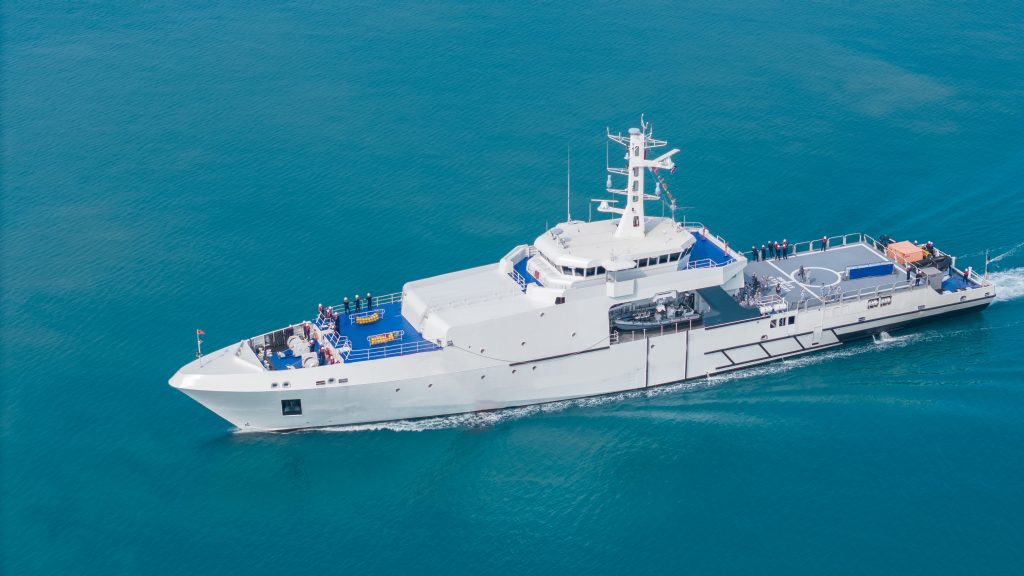
By 7 May 2026, Italy had recorded 8,730 irregular maritime arrivals since the start of the year, compared with 17,879 over the same period in 2025. The decline followed stronger interception activity by Libyan and Tunisian maritime authorities and continued European investment in vessels, training, surveillance and anti-smuggling operations. The European Union (EU) has increasingly organised migration control around preventing movement before boats enter areas where European states would assume direct responsibility. The resulting system places North African coast guards, border forces and security institutions at the operational centre of Mediterranean enforcement, while European institutions provide much of the finance, technology and coordination that sustains those activities.
The EU’s Spring 2026 Pact for the Mediterranean Action Plan formalised this approach through what it calls a “whole-of-route” migration framework. The plan links land-border surveillance, maritime interception, anti-smuggling operations, returns, legal mobility, and information sharing across North Africa and along migration routes further afield. Its funding illustrates the depth of this shift. Planned and existing programmes include:
- EUR 25 million for the SHARAKA border-management and search-and-rescue programme in Libya;
- EUR 18 million for Tunisia’s anti-smuggling and anti-trafficking programme;
- EUR 15 million for anti-smuggling activities in Morocco;
- EUR 30 million for the Partnership to Counter the Smuggling of Migrants and Trafficking in Persons in Egypt;
- EUR 110 million to strengthen the Egyptian Navy and Egyptian Border Guards for surveillance and search-and-rescue operations; and,
- EUR 140 million under the 2025–2027 Southern Neighbourhood migration programme for border management and anti-smuggling activities
These programmes sit alongside earlier European financing for patrol vessels, search-and-rescue capacity, training and border-management systems.
Libya and Tunisia currently carry the largest operational role on the Central Mediterranean route, although the political foundations of their cooperation with Europe differ. Libya contained more than 936,000 migrants from 47 nationalities in early 2026 and continues to function simultaneously as a labour market, transit territory and departure point. European migration control therefore relies on maritime and security institutions operating inside a fragmented Libyan political environment, where authority over detention, policing and migration management is divided among state bodies and security networks. Continued interception can reduce crossings towards Italy while increasing the number of people remaining within Libya’s domestic migration system.
Tunisia presents a more centralised form of the same dependency. European support has expanded Tunisian maritime surveillance, search-and-rescue capacity and anti-smuggling operations, while the government of President Kaïs Saïed retains considerable control over how migration enforcement is applied. Stronger interception has increased Tunisia’s importance to Italy and the wider EU, giving the Tunisian government leverage within a relationship that also covers finance, trade and diplomatic engagement. At the same time, more effective containment leaves larger migrant populations inside Tunisia, where residency, asylum, employment and social-protection arrangements remain limited. European success in reducing departures can therefore increase domestic pressure on the North African government delivering that reduction.
Morocco shows how stronger enforcement alters the geography of movement. Moroccan authorities reported preventing 73,640 attempts at irregular migration during 2025, dismantling more than 300 smuggling networks, and rescuing 13,595 migrants at sea. The number of prevented attempts fell from the previous year partly because travellers and smuggling networks were shifting towards other departure areas in West Africa and the southern Mediterranean. This route adaptation is central to the EU’s whole-of-route strategy. As control tightens in one location, other transit states and departure points gain importance, expanding the geographical reach of European migration cooperation deeper into African migration corridors.
Egypt is increasingly being positioned as an upstream buffer within this architecture. European investment in Egyptian naval and border forces is designed to strengthen surveillance and interception capabilities before Egypt becomes a larger Mediterranean departure platform. This approach reflects the EU’s wider preference for managing movement earlier along migration routes. Egypt is already hosting large refugee and migrant populations generated partly by conflicts in neighbouring states, particularly Sudan, and has tightened aspects of its border and visa regime. European financing therefore enters a migration environment shaped by Egypt’s own domestic security, labour market, and public service pressures.
The distribution of incentives across this system is uneven but reciprocal. European governments possess substantial financial, technological and diplomatic resources, while North African governments control the territory, police forces, coast guards and administrative decisions that determine whether departures are prevented in practice. Tunisia has already demonstrated that migration cooperation can be integrated into broader negotiations with European partners, while Morocco’s enforcement relationship with Spain sits within a broader diplomatic and commercial partnership. North African states are therefore active participants with their own interests, and their growing operational importance gives them greater negotiating weight as European political pressure to reduce arrivals increases.
The central weakness in the emerging model lies in the imbalance between investment in enforcement capacity and the institutions required to manage migration inside North Africa. European funding is increasingly sophisticated in coastal surveillance, maritime interception, anti-smuggling operations, border policing and return cooperation. Libya, Tunisia, Egypt and Morocco still face very different levels of capacity in asylum administration, documentation, labour-market access, municipal services and long-term migrant protection. People whose journeys are interrupted remain within these national systems, enter informal labour markets, attempt alternative routes or become dependent on international assistance. The operational success of border enforcement can therefore generate longer-term governance demands within countries whose migration systems were never designed to permanently absorb large populations prevented from continuing north.
The human consequences remain visible alongside the reduction in arrivals. The International Organisation for Migration (IOM) had recorded at least 606 people dead or missing across Mediterranean routes by 23 February 2026, while the reported Central Mediterranean toll had risen to around 765 later in the spring. These figures indicate that falling arrivals and safer journeys are separate measures of performance. Stronger interception, changing departure points, poorer vessels and route adaptation can reduce the number of people reaching Europe while maintaining high exposure to death, exploitation and disappearance across the wider Mediterranean system.
European legal changes scheduled for 12 June 2026 are likely to deepen this external dependence. The EU has already adopted a common safe-country list, including Egypt, Morocco and Tunisia, and has revised the safe third country framework to give member states broader grounds for treating some asylum claims as inadmissible where there is transit or an agreement with a third country. Once these provisions begin to apply, North African states will play a larger role at both ends of European migration management: through enforcement before departure and through prospective asylum and return arrangements after arrival.