
Executive Summary
The June 2025 confrontation between Israel and Iran has introduced a new phase in an already unstable Middle Eastern regional order. For African states, the direct impact remains limited to political and economic aftershocks rather than security disruptions. However, the crisis reveals structural vulnerabilities in the continent’s economic resilience and diplomatic coherence. African responses have been shaped by a careful calibration of principles and pragmatism, reflecting concerns over economic exposure, energy dependence, and multilateral relevance. While no African country has the capacity or interest to intervene in the conflict, the implications for energy markets, shipping routes, and Africa’s positioning within an increasingly polarised international system demand close attention.
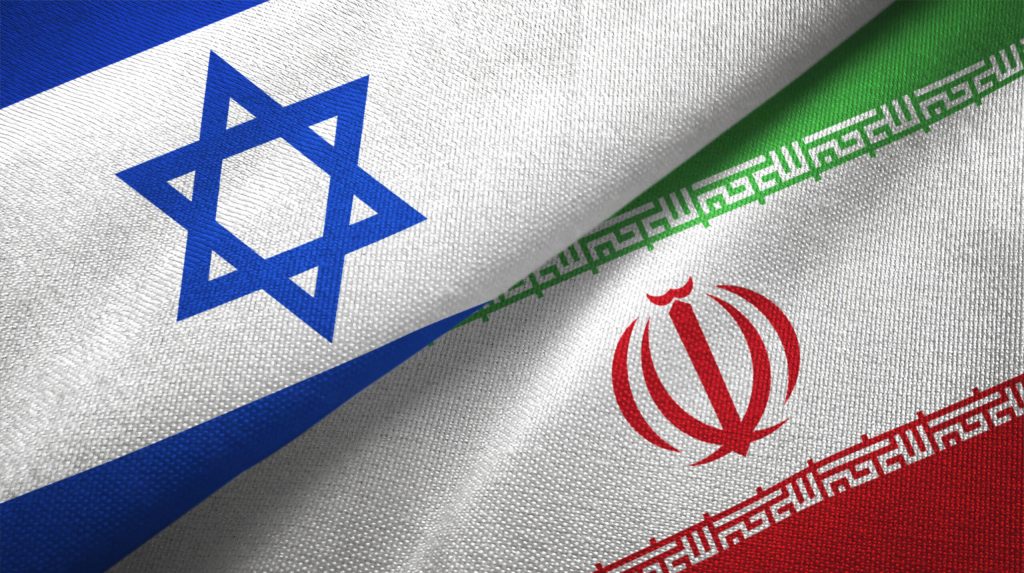
Israel-Iran Conflict: Africa’s Reactions and Concerns
On 12 and 13 June 2025, Israel launched coordinated airstrikes on over one hundred targets across Iran. This military action, dubbed Operation Rising Lion, targeted uranium enrichment infrastructure at Natanz and Esfahan, air defence systems, logistics corridors, and selected industrial zones. Israeli officials cited intelligence indicating that Iran was close to acquiring a breakout nuclear capability. Iran’s response, under Operation True Promise III, included missile and drone strikes on military and civilian sites in Israel. Although Iranian officials refrained from targeting United States (US) assets in the region, the potential for a broader escalation remains present. While the conflict has remained geographically confined to the two belligerents, the economic and diplomatic effects have been felt globally. Africa, with its diverse set of trade dependencies, political alliances, and security partnerships, has reacted in ways that highlight both its limitations and its emerging diplomatic voice.
Africa’s Diplomatic Postures
The African Union (AU) released a statement on 13 June expressing deep concern over the outbreak of hostilities. The statement called for an immediate cessation of violence and a recommitment to dialogue and multilateral mechanisms. The AU did not assign blame but reaffirmed support for international law and the peaceful resolution of disputes. This position was echoed by several member states, though the emphasis varied according to their political orientation and strategic priorities.
South Africa issued one of the more direct statements, criticising the Israeli strikes and underscoring the need to protect civilian populations. The country reiterated its longstanding support for a nuclear-weapons-free zone in the Middle East and called for enhanced diplomatic efforts. Nigeria and Benin issued a joint communique that avoided taking sides but warned of the risks of further escalation and the humanitarian consequences that could follow. Egypt, which maintains formal relations with both Israel and Iran, focused on the risk of destabilisation in the region and argued that sustainable peace could only be achieved through political dialogue.
Tunisia’s response diverged from others by explicitly condemning Israel’s actions and characterising the strikes as a violation of international law and regional stability. Ghana, while refraining from taking a clear political position, has voiced concern about the domestic implications of rising oil prices. Kenya, Namibia, and other member states expressed support for de-escalation and invoked the need for a more effective United Nations (UN) Security Council, highlighting perceived deficiencies in the global peace and security architecture.
Security Concerns
The direct security threat to African states remains low at this stage, although secondary risks persist. Shipping routes through the Red Sea, Gulf of Aden, and the Strait of Hormuz are critical for the movement of goods and energy supplies to and from East Africa. Any further destabilisation in the maritime domain could affect port activity in Djibouti, Sudan, Kenya, and Somalia. Although the Suez Canal remains operational, increased freight costs and longer transit times for rerouted vessels are already being reported.
Migration flows have not increased, but contingency planning is being quietly considered by states in the Horn of Africa and North Africa, which could be exposed to refugee movements in the event of a broader regional breakdown. Intelligence cooperation across Africa remains patchy, with few mechanisms available to assess or pre-empt security spillovers that might emerge if the conflict intensifies or expands into proxy confrontations.
More broadly, the confrontation puts Africa in a difficult diplomatic position. Several states maintain relations with both Israel and Iran, often shaped by trade or ideological factors. Iran has cultivated strategic ties in recent years, notably through outreach to Kenya, Uganda, Burkina Faso, and Zimbabwe. These relationships are likely to be scrutinised more closely by Western partners, creating new diplomatic pressures. African states that rely on development financing, security partnerships, or energy cooperation with extra-regional powers may find themselves operating in a more constrained diplomatic space.
Economic Repercussions
The price of Brent crude increased by over twelve percent within forty-eight hours of the Israeli strikes. For African economies that heavily rely on oil imports, such as Ghana, Rwanda, and Senegal, this introduces inflationary pressures and fiscal strain. In Ghana, where recent macroeconomic adjustments included energy pricing reforms and subsidy cuts, analysts are forecasting a five to seven percent rise in fuel costs within weeks. These increases could trigger public discontent and force policy reversals.
Currency markets have also reacted. The South African rand depreciated by over 1.5 percent against the dollar in the immediate aftermath of the attacks. The Nigerian naira, already under pressure due to monetary policy adjustments and fluctuating foreign exchange reserves, experienced added volatility. The risk environment for African sovereign bonds and equities has worsened as investors shift capital into safer assets.
Disruptions to shipping routes, particularly in the Red Sea and the Suez Canal, are affecting East African countries dependent on external food and energy imports. Shipping firms are rerouting vessels around the Cape of Good Hope, increasing transit times and operational costs. The International Maritime Bureau has issued new advisories, and insurance premiums for commercial carriers through affected zones have risen. Countries such as Ethiopia, Djibouti, and Somalia, which rely heavily on maritime trade, face logistical and fiscal pressures if these trends persist.
Conclusion
Africa is not at the centre of the Israel-Iran confrontation, but its peripheral position in global systems makes it susceptible to its consequences. The responses of African governments and the AU have generally upheld long-standing principles of multilateralism, sovereignty, and non-interference. These responses reflect not only diplomatic caution but also the continent’s exposure to broader global risks.
The economic strain, especially for oil-importing states, is already material. The security threat remains contingent on developments in maritime domains and regional proxy activity. Strategically, African countries must manage complex partnerships without becoming entangled in a conflict not of their making. This moment highlights the importance of strengthening African economic resilience, enhancing regional cooperation, and preserving diplomatic autonomy in an increasingly complex international landscape.