
25th August 2026
Executive Summary
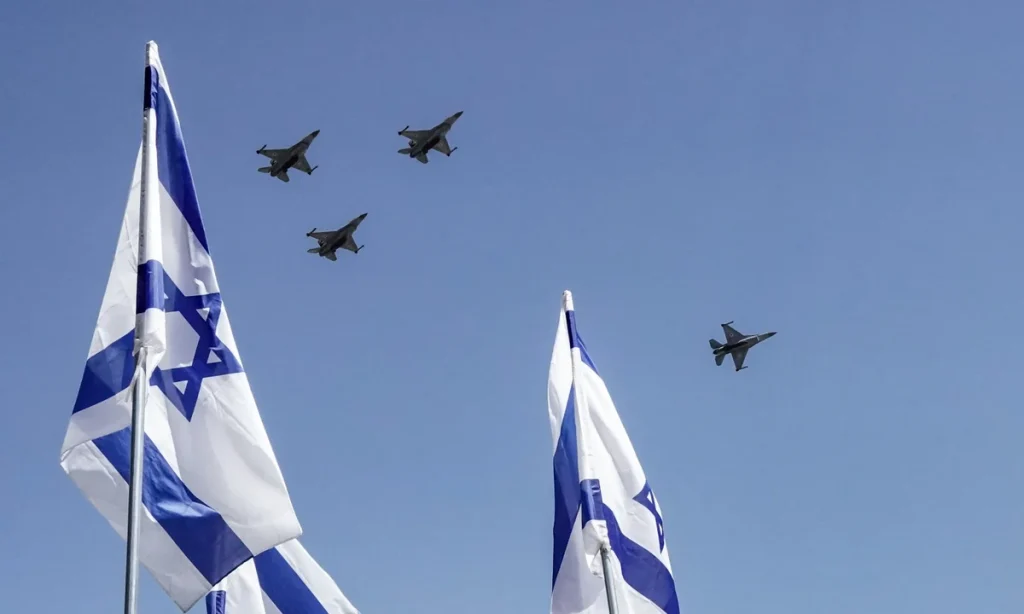
Israel’s attack on Abu Al Duhur on 18 August marked the clearest escalation in the Israel–Türkiye competition since June. Israeli aircraft struck the airbase eight times after a Turkish military delegation had inspected rehabilitation work there. Abu Al Duhur sits in Idlib governorate, approximately 70 kilometres from Türkiye, far north of the southern Syrian areas where Israel has concentrated much of its military activity since the fall of Bashar Al Assad. Syria and Türkiye denied that the Turkish government was preparing a permanent military deployment. Israel said its intelligence indicated that Turkish forces were close to establishing a presence, while United States (US) envoy Tom Barrack subsequently questioned that assessment. Israel acted before any advanced Turkish-supported system at the facility had become publicly established, setting a precedent for striking Syrian infrastructure based on the capability Israel assesses could emerge from it.
The Israeli concern increasingly centres on the future military utility of Syrian facilities. Turkish-supported radar could improve Syrian awareness of Israeli aircraft; air-defence systems could raise the cost of Israeli operations; rehabilitated airfields could support Syrian or Turkish aviation; unmanned aerial vehicles could expand surveillance and strike capability; and stronger command infrastructure could eventually connect these assets into a more coherent national system. Syria currently lacks the military capacity to deny Israel access to much of its airspace, leaving Israel with a level of operational freedom that it has strong incentives to preserve. Abu Al Duhur shows that Israeli red lines can follow those capabilities deep into northern Syria, eroding the informal assumption that Turkish proximity would insulate military reconstruction outside the southern theatre.
The approach reflects a wider Israeli willingness to shape neighbouring security environments through unilateral military action. Israeli forces have maintained forward positions and continuing strike freedom in Lebanon, imposed security conditions around withdrawal in Gaza, expanded military control in Syrian territory and used direct force against Iran in 2026. Syria has its own dynamics, but the pattern helps explain Israel’s readiness to enforce security requirements before neighbouring governments produce arrangements that Israeli authorities consider adequate. Defence Minister Israel Katz has publicly supported a forward-defence approach in which Israeli forces operate beyond Israel’s borders when threats are judged insufficiently contained. In Syria, that logic is increasingly permeating the structure of the Syrian armed forces and the external partnerships supporting their reconstruction.
Türkiye is becoming the main regional constraint on how far Israel can extend that approach inside Syria. Turkish interests depend heavily on the emergence of a central government capable of controlling the northern frontier, absorbing armed formations, managing the Syrian Democratic Forces (SDF), reducing cross-border security pressures and creating conditions for refugee returns. Türkiye also has economic interests in restoring Syrian transport corridors, energy links and commercial access towards Jordan and Gulf markets. A functioning Syrian state reduces Türkiye’s need to administer security directly across northern Syria while preserving Turkish influence through institutions closely connected to Türkiye.
That relationship has deepened rapidly since June. A Syrian Ministry of Defence delegation visited Türkiye’s National Defence University to develop officer education, military training and professional development. Turkish naval vessels visited Latakia in July, where senior officers discussed maritime cooperation and the restructuring of Syrian armed forces. On 6 August, the governments created a High-Level Coordination Council covering defence, banking, transport, border management, energy, and reconstruction. Discussions on railway connectivity, hydrocarbon exploration, and commercial integration have further strengthened the relationship. Türkiye is embedding itself in the institutions through which Syria intends to rebuild state capacity, giving it influence that endures even if individual bases or military installations are damaged.
Former armed factions incorporated into Syrian national structures continue to maintain regional networks and varying degrees of internal cohesion, while advanced air defence, aviation, and command capabilities remain limited. Turkish involvement therefore concerns the direction of Syrian military development over several years. Training officers, shaping doctrine and professional education, assisting naval structures and supporting defence administration can gradually produce a more coherent force even without a large Turkish combat deployment. Israel is intervening early enough to influence that trajectory, before Turkish-supported systems become deeply integrated and politically harder to remove.
The Syrian government is using these competing external interests to expand its own strategic room. President Ahmed Al Sharaa’s government continues defence cooperation with Türkiye, strengthens relations with Saudi Arabia and Jordan, and maintains security negotiations with Israel. Foreign Minister Asaad Al Shaibani has insisted that Syria will rebuild its armed forces and determine its external defence relationships, while Syrian negotiators continue seeking restoration of the 1974 disengagement framework and Israeli withdrawal from positions occupied after Assad’s fall. The government therefore has an incentive to retain Türkiye as a major defence partner while avoiding exclusive dependence on Türkiye and preserving diplomatic channels with Israel and the US.
Israel and Türkiye consequently exercise different forms of leverage over the same reconstruction process. Israel holds the stronger immediate military instrument. Fixed airbases, radar sites, depots and command facilities can be identified and damaged before they acquire substantial operational value. Türkiye is building influence through training, defence institutions, political relations and economic integration, allowing it to restore cooperation after physical infrastructure is damaged. Israel can repeatedly delay selected military capabilities; removing the Turkish role from Syrian state reconstruction would require a much broader change in Syria’s political and economic relationships. That asymmetry helps explain why Israeli pressure has yet to produce a Turkish retreat.
Türkiye’s response to Abu Al Duhur illustrates the limits both governments are currently observing. Türkiye condemned the attack, rejected Israel’s account of an imminent permanent deployment and reaffirmed military cooperation with Syria. It did not retaliate militarily and supported stronger deconfliction through the US. Türkiye has substantial reasons to keep the confrontation controlled. Its Syrian strategy still interacts with North Atlantic Treaty Organisation (NATO) relationships, economic pressures, Gulf investment, the Kurdish security question and its relationship with the US. A direct conflict with Israel would place several of those interests under pressure. Türkiye also has little incentive to allow repeated Israeli strikes to demonstrate that Turkish-backed projects can be abandoned whenever Israel objects, particularly when Türkiye increasingly views Israeli military behaviour in Syria through the wider pattern of Israeli action across the region.