
Executive Summary
The September 2025 Israeli airstrike on Hamas political leaders in Doha represents a direct violation of Qatar’s sovereignty and a significant breach of international norms safeguarding neutral mediation spaces. Occurring during an active peace initiative, the strike undermines the safety of diplomatic environments and weakens the foundational legal protections for third-party facilitators. The incident carries precedent-setting risks by eroding the norm against extraterritorial force in non-hostile states and may deter future mediation efforts, particularly in fragile regions reliant on trusted diplomatic venues. Without a coordinated international response, this development could damage global conflict resolution frameworks and jeopardise ongoing and future political settlements across the Middle East and Africa.
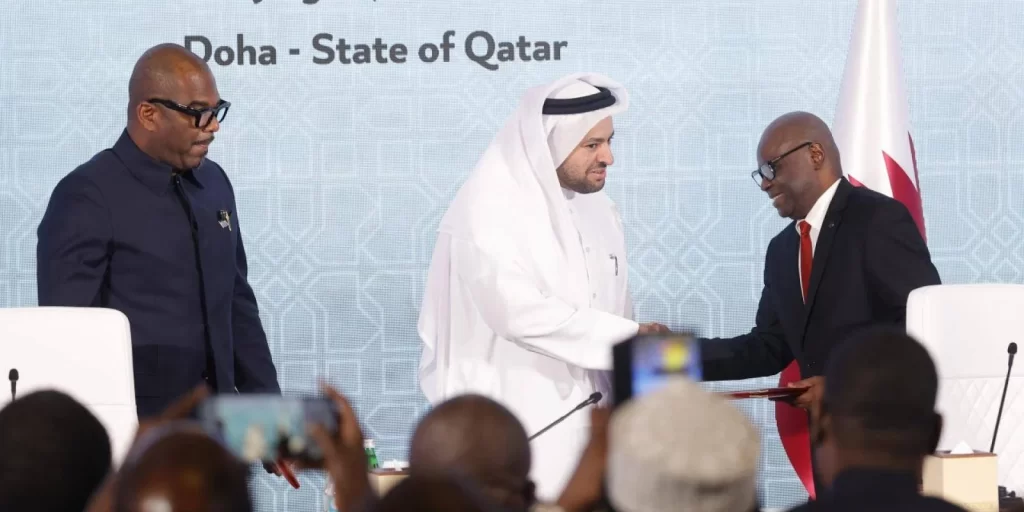
The Israeli airstrike conducted on 9 September 2025 in Doha, Qatar, targeting senior Hamas political figures, constitutes a serious development with far-reaching implications for international diplomacy, third-party mediation, and the legal norms governing conflict management. The strike took place in the context of ongoing efforts, facilitated by Qatar and supported by international actors, to secure a ceasefire and negotiate the release of hostages in the context of the broader Israel–Hamas conflict. The individuals targeted were reportedly meeting to deliberate on a proposal presented through indirect diplomatic channels, including those backed by the United States (US) and regional interlocutors. The event resulted in the deaths of at least six people, among them members of Hamas’s security detail, an office director, and a Qatari security officer. Key members of Hamas’s political bureau, including Khalil Al Hayya, were present but reportedly survived. The action prompted a sharp official response from the Government of Qatar, which condemned the strike as a violation of its sovereignty and a direct threat to its diplomatic role in regional peace processes.
This development raises acute concerns for the safety and functionality of diplomatic mediation environments. Qatar has played a longstanding role as a facilitator of dialogue in regional conflicts, including hosting negotiations involving parties to the Syrian, Afghan, and Palestinian crises. Its role in the Israel–Hamas context has been particularly pronounced, often serving as an intermediary in prisoner exchanges and ceasefire arrangements. The decision to target individuals engaged in political deliberations within Qatari territory introduces a direct security risk to all future mediation spaces. Such an act could disincentivise states from hosting negotiations out of concern for becoming the location of military operations, thereby shrinking the already limited number of viable venues for third-party peace facilitation in complex conflicts.
There are further implications for international mediation norms. The individuals targeted were not engaged in active combat, nor were they present on an active battlefield. They were operating within the jurisdiction of a third-party state engaged in facilitation efforts. The principle that negotiation spaces must remain protected, even when involving actors considered adversarial or illegitimate by one party, is a functional requirement for conflict resolution. Undermining this principle sets a precedent wherein diplomatic engagement may be interpreted as enabling or legitimising the targets of such operations. The result is a disincentive for mediators to host or protect negotiation participants, which may in turn dissuade armed or political actors from entering negotiations in good faith. The long-term effect could be to make formal diplomacy untenable in precisely the contexts where it is most needed.
From a normative perspective, this incident challenges the stability of several long-standing assumptions about the limits of extraterritorial force. There is a growing body of state practice involving the use of force in third countries against non-state actors, often justified on grounds of national security. However, this case presents key distinctions: the operation occurred in a neutral state not considered a conflict party; the targets were not engaged in hostilities at the time; and the location was being used for political dialogue under the protection of a recognised diplomatic facilitator. If tolerated by the international community, such actions risk normalising the use of force in diplomatic contexts and accelerating the erosion of core principles of international law, including respect for sovereignty, non-intervention, and the protection of negotiation processes.
The strike also carries consequences for regional diplomatic alignments. Qatar’s relationship with Israel has been shaped by its intermediary role, supported at various times by external actors, including the US. The use of military force on its territory has introduced substantial strain in bilateral relations and also within broader regional dynamics. Gulf states that have cautiously expanded or normalised relations with Israel may reconsider the risks such engagement poses to their autonomy and security. Meanwhile, regional bodies such as the League of Arab States and the Organisation of Islamic Cooperation are under pressure to respond in ways that reassert collective standards regarding respect for sovereignty and the sanctity of diplomatic space.
African states, too, may interpret this development through the lens of their own mediation and conflict resolution experiences. Across the continent, governments and regional organisations have hosted peace talks involving non-state armed actors, often in volatile security environments. If such hosting is no longer protected from external military interference, there is a real danger that African-led diplomatic processes, whether in the Sahel, Great Lakes, or Horn of Africa, may be delegitimised or disrupted. This affects the credibility of African mediation and could also expose host countries to retaliatory or pre-emptive actions by foreign powers seeking to shape outcomes through force rather than diplomacy.
In practical terms, the strike introduces a risk-averse posture among both mediators and conflict parties. States may become reluctant to facilitate or host negotiations, while non-state actors may demand expanded security guarantees or withdraw entirely from externally brokered talks. In either case, the operational environment for peace processes becomes less viable. The precedent set by this action may deter future third-party efforts, increase the militarisation of diplomacy, and strengthen the perception that international rules are subordinate to unilateral security calculations by militarily dominant states.
The longer-term consequences of this action will depend heavily on the international response. Multilateral institutions and regional organisations face a credibility test in affirming the integrity of the norms at stake. The failure to respond coherently may accelerate a shift toward fragmented and ad hoc forms of diplomacy, where the protection of mediators and negotiation participants is no longer assumed but conditional. This would represent a structural regression in global conflict resolution practice and significantly hinder efforts to promote peaceful settlements in complex, asymmetrical conflicts.