
18th August 2026
Executive Summary
The 46th Southern African Development Community (SADC) Summit, held in South Africa on 17 August 2026, endorsed a more focused approach to regional integration following the mid-term review of the Regional Indicative Strategic Development Plan (RISDP) 2020–2030. The review reportedly scored overall implementation at 5.06 out of ten and recommended focusing limited regional resources on industrialisation, regional value chains, agro-processing, critical minerals, energy, economic corridors, one-stop border posts and financing. Cyril Ramaphosa assumed the SADC chair for 2026–2027 as the bloc entered the second half of the RISDP with regional growth of about 3.4 percent in 2025, projected at 3.9 percent in 2026, and manufacturing accounting for only 10.9 percent of regional gross domestic product.
The shift responds to an integration model that has produced a large body of protocols and strategies without creating an equally deep regional production system. Intra-SADC trade reached approximately 20.2 percent of total regional trade in 2025, still below its pre-pandemic level, while foreign direct investment rose by 44 percent to about USD 11 billion and remained concentrated largely in Mozambique and South Africa. The SADC Free Trade Area (FTA) also remains incomplete. Angola, Comoros, and the Democratic Republic of the Congo (DRC) remain outside the arrangement, although Angola has submitted an accession offer. This leaves several economies central to the region’s mineral and transport networks only partly integrated into SADC’s own preferential trade framework.
The remaining barriers increasingly concern national regulation and industrial policy. SADC identified mechanisms in April to resolve 52 percent of reported non-tariff barriers, leaving the remainder subject to bilateral negotiation. Agricultural restrictions imposed at different times by Botswana, Namibia and Mozambique illustrate the underlying tension. Governments seek regional food trade while also protecting domestic producers, employment and processing capacity. Similar pressures arise from local-content rules, procurement preferences, licensing systems and domestic processing requirements. These measures can support national industrial objectives while making regional production chains more costly and less predictable.
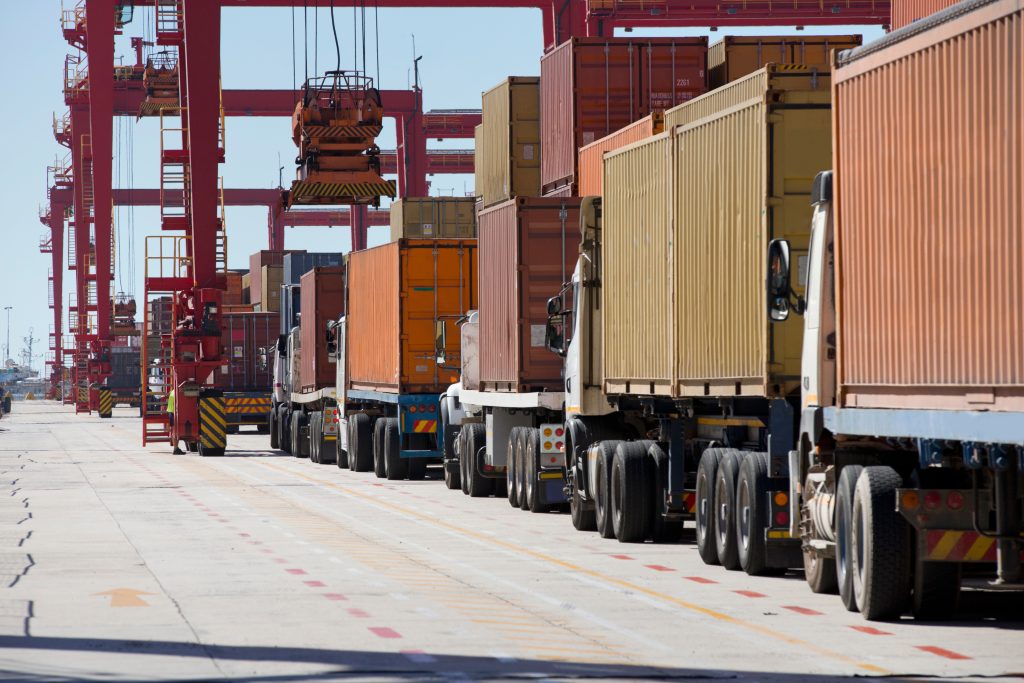
Physical infrastructure imposes a comparable constraint. Freight moving north from Durban through Beitbridge and Chirundu to Kasumbalesa requires an average of 15 days, 21 hours and five minutes. In July, construction-related congestion at Kasumbalesa reduced daily truck clearances into the DRC from roughly 450–500 vehicles to around 200–250 at the worst points, with queues extending beyond 20 kilometres. These delays affect the main corridor linking South African ports and industrial centres to Zimbabwe, Zambia and the DRC, including the copper- and cobalt-producing areas that SADC wants to connect to regional processing and manufacturing.
SADC’s stronger areas of integration show a different pattern. The Southern African Development Community Real-Time Gross Settlement system (SADC-RTGS) links 15 member states and processes roughly USD 15 billion in equivalent each month. The addition of the Angolan kwanza in July expanded the system beyond its heavy reliance on the South African rand, although wider use will depend on bank participation, currency liquidity and commercial demand. The Southern African Power Pool (SAPP) has also developed a functioning competitive electricity market, with April 2026 trading volumes 228 percent above April 2025. More than half of the electricity buyers and sellers who were prepared to trade could reportedly not be transmitted due to limited grid capacity. In both systems, the regional institution is functioning while physical infrastructure and commercial adoption limit its full use.
Other initiatives point towards a more flexible model of integration. Malawi, Mozambique, Tanzania, Zambia and Zimbabwe are advancing a Simplified Trade Regime at selected crossings. Botswana and Namibia already permit citizens to use national identity cards at designated borders. SADC has also applied variable geometry to pooled pharmaceutical procurement, allowing participating states to move ahead without waiting for all 16 members. These arrangements suggest that regional integration is increasingly proceeding through smaller groups of states and specialised institutions where the commercial or administrative benefits are clear.
Critical minerals will provide the more difficult test. The DRC and Zambia hold major copper and cobalt resources; Zimbabwe has lithium; Mozambique has graphite and large energy resources; Namibia and Botswana have important mineral deposits; Angola provides mineral, energy and Atlantic transport capacity; and South Africa has deeper manufacturing, engineering, financial and processing capabilities. A regional value chain could distribute extraction, refining, chemical processing, component manufacturing, engineering services and final production across several economies. Each government also has incentives to retain investment, skilled employment, processing capacity and tax revenue domestically. The political difficulty will therefore emerge when SADC begins to decide where individual refineries, smelters, precursor facilities, and industrial plants should be located.
The same distributional problem has constrained earlier efforts to build regional manufacturing. Vehicle assembly requires large production volumes and fixed investment, making replication across several small national markets commercially difficult. Similar economics apply to mining equipment, electrical machinery, fertiliser and agro-processing. SADC’s industrial strategy will depend on whether member states accept complementary roles within regional production chains and whether smaller economies gain visible supplier, processing and employment opportunities. South Africa’s larger industrial base can support this model, yet persistent trade surpluses and the reach of South African firms can also reinforce concerns in neighbouring states about becoming markets for finished products without developing equivalent productive capacity.
Financing will determine how far the narrower integration strategy can progress. The African Development Bank (AfDB) estimates that Southern Africa faces an annual development-financing gap of about USD 55 billion by 2030. The agreement establishing the Regional Development Fund (RDF), adopted in 2016, still lacks enough ratifications to become fully operational. Finance ministers have therefore directed the SADC Secretariat, the AfDB and the SADC Development Finance Institutions Network to develop a standalone special-purpose vehicle with permanent capital and a staged proof-of-concept model. This creates a potential route for financing specific cross-border projects while the treaty-based RDF continues through national ratification processes.
The 2026–2027 chairship will be judged by concrete movement in a small number of areas. Progress on the RDF special-purpose vehicle will show whether regional financing can move beyond institutional design; Angola’s accession process will indicate whether the FTA is expanding into strategically important economies; reductions in North–South Corridor transit times will show whether infrastructure initiatives are affecting commercial conditions; additional transmission investment will determine whether more SAPP electricity can actually cross borders; and named critical-mineral projects involving production stages in several member states will provide the clearest evidence that SADC’s new emphasis on regional value chains is moving from summit commitments into the organisation of regional industry.