
08th October 2026
Executive Summary
The 2026 Iran war accelerated a genuine restructuring of Gulf security. Gulf states are seeking greater authority over escalation, military access, regional diplomacy and defence production while retaining external capabilities that remain difficult to reproduce locally. Around USD 80 billion in United States (US) defence approvals for Gulf partners came after the war began, illustrating the depth of this overlap. The emerging system combines Gulf Cooperation Council (GCC) defence integration, South–South security partnerships, US and European support, defence localisation and direct engagement with Iran. Its main constraints sit inside the region: uneven GCC threat perceptions, limited sovereignty-sharing, technological dependence and competing approaches towards Iran and Israel. A durable Gulf-led order will therefore depend on whether current wartime coordination develops into permanent regional capability and greater control over the political decisions that determine Gulf security.
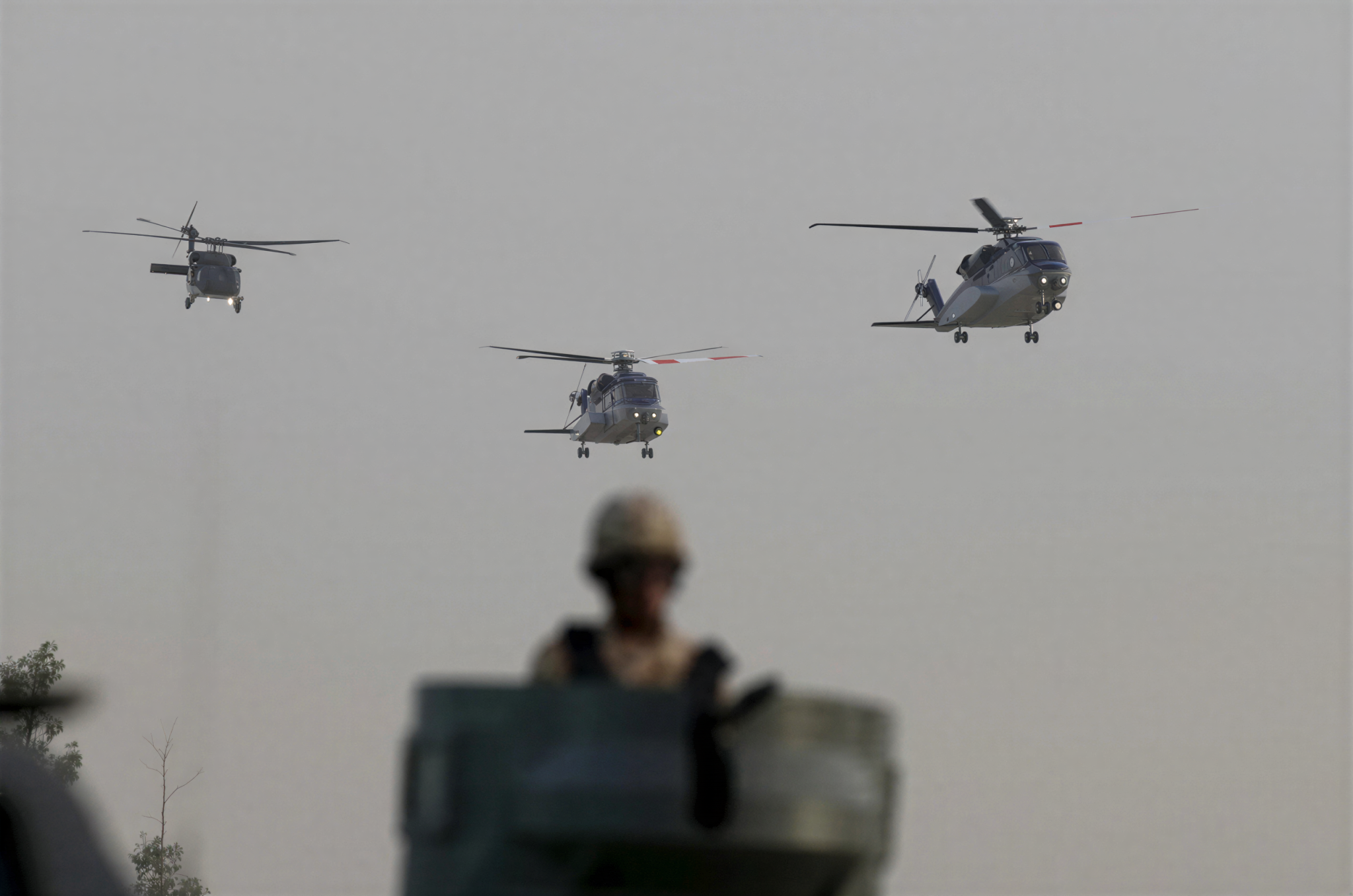
Iran war exposed the limits of external protection
The war launched by the United States (US) and Israel against Iran in February 2026 exposed the limits of a Gulf security system built around strong national militaries, extensive external partnerships and weak regional control over escalation. Gulf Cooperation Council (GCC) governments had spent the preceding months trying to contain confrontation with Iran, yet military decisions taken outside the Gulf still exposed their territory, infrastructure and economies to retaliation. Around 6,400 Iranian missiles and drones were subsequently launched against GCC states and Jordan during the main phase of the conflict, accounting for more than 80 percent of Iranian attacks on foreign states. The scale of that exposure forced Gulf governments to confront a problem that procurement alone could not solve: they possessed considerable defensive capability but limited authority over the strategic decisions that generated the threat.
The US relationship illustrates the contradiction most clearly. Gulf states relied heavily on US intelligence, missile defence, radar systems, munitions, sustainment and strategic warning during the conflict, and those ties deepened as the war continued. More than 45 percent of US Foreign Military Sales approvals under the current administration have involved Gulf partners, while roughly USD 80 billion of approximately USD 104 billion in approved Gulf defence sales came after the war began. Saudi Arabia’s proposed USD 24.3 billion acquisition of 48 F-35 aircraft in September further illustrates the depth of the relationship. The package extends far beyond the aircraft themselves and includes secure communications, cryptographic equipment, electronic-warfare database support, classified and unclassified software, training, maintenance, repair and US government technical assistance.
The result is a widening gap between political autonomy and military dependence. Saudi Arabia, Qatar, the United Arab Emirates (UAE), Oman and other Gulf states are seeking greater influence over the conditions under which foreign forces operate from their territory, how escalation is managed and how external military campaigns affect their own security. At the same time, many of the systems needed to defend Gulf airspace remain embedded in US-led networks. The January establishment of the Middle Eastern Air Defence–Combined Defence Operations Cell at Al Udeid in Qatar strengthened regional coordination but also placed another layer of Gulf air defence inside an externally led command structure.
This duality is shaping the current security transition. Gulf governments are preserving relationships that provide proven military capability while trying to acquire greater control over the political terms attached to them. Qatar has called for a regional collective-security framework and more direct Gulf participation in decisions affecting regional war and peace. The UAE has argued for greater regional self-reliance while maintaining extensive US and Israeli security relationships. Oman continues to prioritise direct regional diplomacy. Saudi Arabia is combining its US relationship with new defence arrangements involving Türkiye and Pakistan. These approaches differ, but they reflect a shared concern about exposure to conflicts that Gulf governments cannot fully shape once escalation begins.
The 2026 conflict has also widened the definition of strategic vulnerability. Before the war, around 20 million barrels of oil per day moved through the Strait of Hormuz, while alternative regional pipeline capacity was estimated at only 3.5–5.5 million barrels per day. Qatar produced around 77 million tonnes of liquefied natural gas annually, with roughly 93 percent of exports passing through Hormuz. Disruption around the strait therefore affected national development strategies, fiscal planning, aviation, shipping and energy security simultaneously. Saudi Arabia has increased reliance on its East-West Pipeline and Red Sea terminals, while the UAE is expanding alternative ports and trade corridors. Control over security increasingly includes the ability to keep national economies functioning during regional confrontation.
Security diversification is accelerating
Gulf security is now being organised through several overlapping arrangements. Existing GCC institutions continue to operate alongside bilateral US relationships, European defence partnerships, Saudi–Türkiye–Pakistan cooperation, Red Sea maritime initiatives, national localisation programmes and direct diplomacy with Iran. China contributes primarily through economic relationships and diplomatic leverage, while Türkiye and Pakistan are becoming more important in defence production, training and military coordination. The result is a system with several providers and several political centres.
Saudi Arabia’s agreement with Türkiye and Pakistan is one of the clearest examples of this trend. The August Makkah Joint Defence Agreement established a mutual-defence commitment, followed by a Strategic Political and Defence Committee on 31 August. The three states agreed to create a permanent secretariat in Saudi Arabia, with Pakistan taking the first three-year leadership term, and expanded cooperation into joint exercises, air defence, unmanned systems, electronic warfare, artificial intelligence, logistics, and defence production. On 5 October, they moved towards practical implementation by approving rapid deployment of agreed forces and capabilities to Saudi Arabia.
Its strategic value will depend on the degree of capability created inside the participating states. Türkiye contributes a mature defence-industrial base in drones, missiles, electronic warfare, naval systems and autonomous technologies. Pakistan brings military personnel, training experience, defence production and longstanding ties with Saudi Arabia. Saudi Arabia contributes capital, procurement scale and a domestic industrial strategy designed to capture more of the defence value chain. These complementarities can strengthen regional autonomy where cooperation produces joint manufacturing, technical training, maintenance capacity, research and access to systems knowledge.
This distinction between procurement and capability is central. A state that buys more weapons from more suppliers gains bargaining room and diplomatic flexibility, but operational dependence can remain largely unchanged if intelligence, software, maintenance, munitions, replenishment and command systems remain external. Gulf governments have therefore advanced furthest in diplomatic diversification, while industrial and technological autonomy remains more gradual. Command integration and intelligence sovereignty remain among the hardest areas to internalise because they require long-term investment, institutional trust and access to sensitive technologies.
The same dynamic is visible in the Red Sea. Saudi Arabia’s proposed multinational maritime coalition drew representatives from 43 countries and the European Union (EU) in July, with 14 states reportedly endorsing the initiative, including Türkiye, Pakistan, Egypt, Kuwait, Bahrain, Qatar, Jordan, Djibouti, Somalia, Sudan and Yemen. The UAE and Oman stayed outside the founding group. This created another layer of regional security with overlapping membership but a narrower maritime mandate. Such arrangements allow states to cooperate where interests converge without requiring full strategic alignment across every issue.
A modular system therefore offers Gulf states more flexibility than a single rigid alliance. Air defence can involve one set of partners, maritime security another, defence production a third and crisis diplomacy a fourth. That flexibility also creates coordination demands. Different command structures, weapons systems, political obligations and escalation thresholds can complicate joint action during crises. The value of the emerging architecture will depend on whether these layers communicate effectively and whether Gulf governments retain enough authority to coordinate them.
The hardest transition remains inside the GCC
The GCC has established defence institutions over several decades, including the Joint Defence Council, Peninsula Shield Force and Unified Military Command. Yet the 2026 war demonstrated that member states still relied heavily on separate national defence systems. GCC states intercepted large numbers of missiles and drones, but early warning, intelligence fusion, interceptor allocation, command and rules of engagement remained fragmented. Existing institutions therefore provided political coordination more effectively than integrated operational defence.
The response since mid-2026 has become more focused. On 14 July, GCC defence officials convened the first meeting of a dedicated team tasked with strengthening the Unified Military Command. Air-force and air-defence commanders met in Bahrain in early September to improve coordination between national systems. The GCC ballistic-missile early-warning working group held its 38th meeting on 7 September, focusing on technical development, interoperability and readiness. Logistics officials met again on 30 September to discuss integrated supply and support. These initiatives target the specific weaknesses exposed during the war.
Progress will depend on political decisions that go beyond equipment. A common early-warning picture requires continuous exchange of radar and surveillance data. Integrated missile defence requires shared identification standards and agreed procedures for engagement. Common interceptor planning requires governments to decide whether scarce munitions can be allocated according to regional priorities. A Unified Military Command requires clarity over which decisions can be delegated during a crisis and which remain under national authority.
These questions have repeatedly slowed GCC integration because regional autonomy creates its own sovereignty dilemma. Smaller Gulf states have historically relied on bilateral relationships with external powers partly to preserve their freedom of manoeuvre inside the GCC. Qatar, Kuwait, Oman and the UAE have all resisted arrangements that could institutionalise excessive Saudi influence over national security decisions. External partnerships therefore served two functions: protection against external threats and protection of national autonomy within the Gulf.
That calculation remains relevant. Saudi Arabia is pursuing a broader leadership role through collective arrangements and minilateral partnerships. The UAE has built extensive national military capacity and maintains relationships with the US, France, Israel and other partners. Qatar and Oman continue to place greater weight on mediation and direct engagement with Iran. Kuwait and Bahrain operate from different domestic, geographic and strategic positions. The renewed Saudi-UAE engagement in late September eased immediate tension after their divergence over Yemen, but their regional priorities remain distinct.
Greater independence from external security management therefore requires deeper reliance among Gulf states themselves. Governments seeking more regional control must share intelligence, infrastructure and selected military functions with neighbours whose strategic priorities they do not always share. That makes functional integration more realistic than full political convergence. Missile warning, air defence, maritime security, logistics, cybersecurity and protection of critical infrastructure can advance through common systems while national governments retain authority over wider foreign policy and offensive military operations.
This approach could also reduce the political sensitivity surrounding Saudi predominance. A GCC state may accept integrated radar coverage or shared logistics without accepting a broader Saudi-led foreign policy. Cooperation can therefore deepen through specific functions where national interests overlap clearly. The test will come once immediate wartime pressure declines. Previous crises produced bursts of GCC coordination that weakened when political rivalries returned. Permanent data sharing, common operating procedures and routine joint planning would indicate a deeper institutional shift.
Regional defence production is gaining ground
The growth of defence cooperation with Türkiye and Pakistan reflects a wider shift towards security relationships that combine diplomacy with industrial and technical exchange. Both states offer Gulf governments capabilities that differ from the traditional Western supplier model. Türkiye has built an increasingly sophisticated defence industry across drones, missiles, electronic warfare, naval systems and autonomous technologies. Pakistan combines military scale, training capacity, defence manufacturing and long-standing cooperation with Saudi Arabia and other Gulf partners.
For Gulf states, the strategic value lies in how much productive capability these partnerships leave behind. Joint manufacturing, maintenance, research, software integration, training and local supply chains create a more durable form of autonomy than procurement alone. Saudi Arabia’s localisation programme already seeks to move a larger share of defence expenditure into domestic industry, while the UAE has developed its own defence-manufacturing groups and technology partnerships. Cooperation with Türkiye and Pakistan can accelerate that process where the relationship includes genuine technology transfer and institutional development.
This model also carries limits as Türkiye and Pakistan pursue their own national interests and will seek commercial, diplomatic and strategic returns from deeper Gulf relationships. Their systems also need to operate alongside large stocks of US and European equipment already embedded in Gulf armed forces. Interoperability therefore becomes central. A layered force structure can create resilience through multiple suppliers, but it can also complicate communications, logistics and command if governments accumulate systems without a coherent integration strategy.
The current Saudi–Türkiye–Pakistan framework will provide an early test. Rapid deployment commitments and high-level defence committees show political intent, but a durable security-production model requires more demanding forms of cooperation: shared doctrine, common technical standards, industrial programmes, regular exercises and compatible command systems. The agreement becomes strategically transformative when participating states can jointly sustain capability during a crisis without waiting for an external supplier to provide every critical input.
The same standard should apply to future partnerships with India, China or other middle powers. Gulf autonomy will grow as external cooperation builds regional knowledge, production, and maintenance capacity. Supplier diversification can improve negotiating leverage, but regional control depends on who owns the technical ecosystem once procurement contracts are signed.
Iran and Israel complicate regional control
Iran remains a permanent actor in the Gulf security environment. Its missile and drone capabilities, relationships with armed groups and ability to disrupt shipping create direct pressure on Gulf states, while shared geography ensures continued interaction. The 2026 war weakened confidence generated by earlier détente, but it also reinforced the need for direct mechanisms capable of containing escalation. Qatar, Oman, the UAE and Saudi Arabia have therefore continued different forms of dialogue even as defence preparations have intensified.
Qatar has advanced the clearest proposal for an inclusive regional security framework. Oman continues to maintain channels focused on navigation, de-escalation and crisis management. The UAE has reopened higher-level engagement with Iran while strengthening national defence and resilience. Saudi Arabia has explored non-aggression concepts while expanding its deterrence partnerships. Pakistan occupies an unusual position because it participates in the Saudi–Türkiye–Pakistan framework while maintaining working relations with Iran. In early October, Pakistani Foreign Minister Ishaq Dar disclosed that Iran had proposed political engagement with the Houthis and that the three pact members would consider the proposal.
These initiatives point towards a dual approach built around deterrence and managed coexistence. Gulf governments have little incentive to weaken defensive capability against Iranian missiles and drones, yet permanent confrontation would impose substantial economic and strategic costs. Hormuz alone makes a purely exclusionary architecture impractical. Maritime incidents, airspace violations, proxy activity, missile launches, attacks on infrastructure and shipping disruption all require mechanisms for rapid communication when political relations deteriorate.
Israel presents a different structural problem. Its current security doctrine relies heavily on maintaining superior military capability, preserving wide freedom of unilateral action and preventing hostile actors from developing capabilities that Israel considers strategically threatening. That doctrine has produced repeated military operations across Gaza, Lebanon and Syria, while Israeli forces have also expanded their presence in Syrian territory since late 2025. These actions have widened concern among Gulf and Turkish policymakers over an emerging regional order shaped by Israeli military primacy.
The issue becomes sharper because the US formally protects Israel’s qualitative military edge. The proposed Saudi F-35 sale immediately raised questions over how advanced Gulf capabilities would be reconciled with that commitment. This creates an institutional asymmetry inside any US-led regional security framework: Gulf states can expand their military capabilities, but the broader system still embeds a hierarchy designed to preserve Israel’s superior position.
Formal normalisation has not removed this tension. The UAE has developed the Gulf’s deepest relationship with Israel, including intelligence, technology and security cooperation. Israeli air-defence assets and personnel were reportedly deployed to the UAE during the 2026 war. Yet the UAE still suffered extensive Iranian retaliation, while wider Gulf governments have shown little appetite for making Israel the organising centre of regional defence. Security cooperation can produce useful bilateral capabilities while leaving the wider political order unresolved.
Saudi Arabia faces even greater constraints. Palestinian statehood remains central to its position on normalisation, while Israeli policy has moved in the opposite direction through continuing military operations in Gaza, settlement expansion and rejection of a sovereign Palestinian state under current conditions. The political cost of formal alignment with Israel has therefore risen across much of the region. Türkiye increasingly views Israeli behaviour in Syria and the Eastern Mediterranean through a strategic-competition lens, while Pakistan faces its own domestic and foreign-policy constraints on formal security cooperation with Israel.
An inclusive Gulf-led architecture would therefore have to manage two different regional power problems. Iran can pressure Gulf states through missiles, drones, armed partners and geographic leverage around Hormuz. Israel can pressure the wider regional balance through superior military capability, unilateral operations and a security doctrine that seeks broad freedom of action. Gulf autonomy will depend on preventing either power from acquiring the ability to determine the region’s security choices unilaterally.
Policy choices for the emerging Gulf security order
The next stage of Gulf security cooperation will depend on how much authority GCC governments are prepared to pool in areas where national control has historically been protected closely. Early warning, air defence, intelligence fusion and logistics can only function regionally if governments agree on shared data, common procedures and limited delegation during crises. This creates a direct political trade-off. Greater collective autonomy from external powers requires GCC states to rely more heavily on one another, while smaller members remain cautious about arrangements that could institutionalise Saudi dominance. A workable model will therefore need to distinguish between functions that can be integrated regionally and decisions that governments will continue to retain nationally.
Gulf states will also need to decide which forms of external dependence remain strategically acceptable. Replicating every US or European capability domestically would be costly and unrealistic, while continued reliance on foreign intelligence, software, maintenance, munitions, training and command systems can limit freedom of action during crises. The more practical objective is selective internalisation. Maintenance, interceptor availability, software access, data processing, technical training and parts of the defence-industrial supply chain offer areas where greater regional control can materially reduce vulnerability. South–South partnerships with Türkiye and Pakistan become especially relevant where they transfer technology, skills and production capacity into Gulf states instead of creating additional procurement relationships.
The place of Iran and Israel poses a separate strategic choice. Gulf states have strong incentives to deter Iranian missile, drone and proxy capabilities while maintaining direct mechanisms for managing escalation with Iran. Israel presents a different challenge through its pursuit of expansionist policies, military superiority, continued unilateral military action across the region and an approach to security that gives wide priority to its own freedom of action. A Gulf-led architecture built around sovereign equality and regional control will therefore need sufficient political and military weight to prevent Israel from setting the security terms for neighbouring states. This also places limits on any model that relies heavily on aligning with one regional power against the other.
The institutional form of the emerging order will determine whether these choices can coexist. A single alliance is unlikely to accommodate the different strategic preferences of Saudi Arabia, the United Arab Emirates, Qatar, Oman, Kuwait and Bahrain. A modular system offers greater flexibility: GCC structures can carry territorial defence and early warning; separate arrangements can address Red Sea security; Türkiye and Pakistan can support defence production and selected military functions; the US and European states can continue to provide specialised capabilities; and Gulf-Iran mechanisms can manage escalation where direct communication is essential. The policy challenge will be to establish clear boundaries between these arrangements, ensure information can move across them, and prevent overlapping security commitments from creating competing chains of authority during a crisis.