
Executive Summary
The Sudanese Armed Forces (SAF) has recently regained control of the strategic city of Wad Madani after a five-day military operation in Al-Jazira state. The SAF’s broader offensive began on 26 September 2024, targeting Khartoum through coordinated attacks via the bridges linking Omdurman, Khartoum, and Bahri. The offensive was backed by extensive air support, including warplanes and drones, enabling the army to regain control of key areas in central Khartoum. The recapture of Wad Madani marks a major shift in the war, cutting off the Rapid Support Forces (RSF) supply lines in the capital and disrupting its reinforcements. This success builds on earlier gains, including the capture of Jebel Moya and Singa, allowing the army to secure vital supply routes connecting eastern Sudan, White Nile, Kordofan, and Darfur. While the SAF has made significant progress, the conflict remains ongoing, with RSF continuing to receive external support, prolonging the battle for control of Sudan.
Sudan’s Military Push: Khartoum Within Reach?
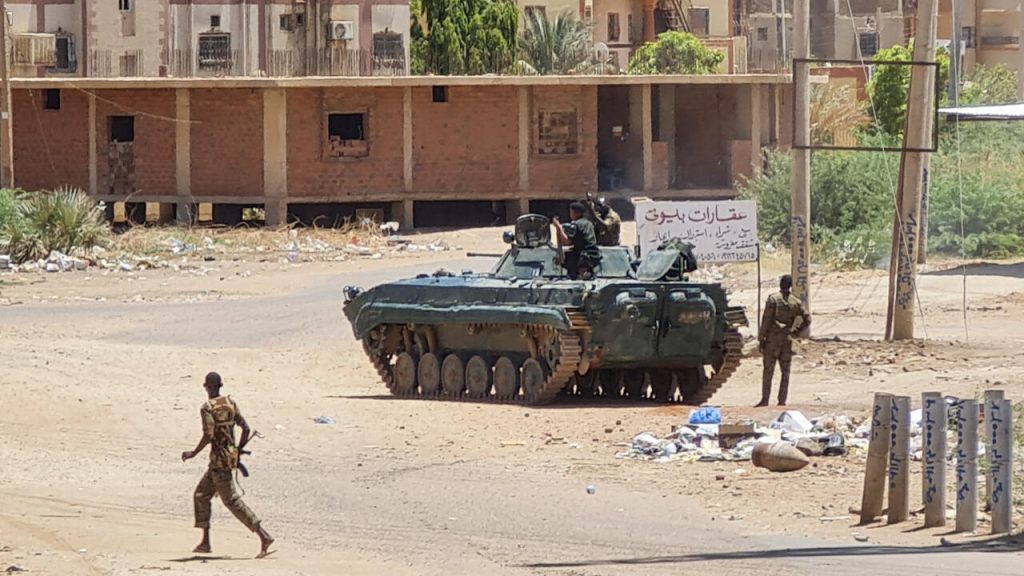
On 11 January 2025, the Sudanese Armed Forces (SAF) seized control of Wad Madani, the capital of Al-Jazira state, after a five-day offensive. This followed a series of military operations aimed at regaining lost territory and cutting off supply lines to the Rapid Support Forces (RSF). The offensive was greenlit following a visit by Lieutenant General Shams Al Din Kabashi to Sennar, White Nile, and Al-Jazira, highlighting the army’s intent to break RSF’s hold on Khartoum and shift the conflict towards Darfur.
The recapture of Wad Madani is a strategic milestone. As Sudan’s second-largest city and a key agricultural and economic hub, it plays a critical role in the country’s logistics network. Its fall isolates RSF positions in Khartoum and disrupts their resupply routes. SAF’s prior gains, including the retaking of Jebel Moya and Singa, have bolstered its ability to maintain supply corridors linking eastern Sudan, White Nile, Kordofan, and Darfur. The army’s current strategy is focused on completely severing RSF reinforcements in Khartoum while consolidating its hold over central Sudan.
Since early 2024, SAF has significantly deepened its military partnerships with Russia, China, Turkey, and Iran, largely in response to Western disengagement. General Abdel Fattah Al Burhan initially sought to balance relations with the US and European powers but shifted strategy as RSF made gains in Al Jazira and Sennar. In April 2024, a Russian delegation led by Mikhail Bogdanov secured an agreement to provide military and logistical support in exchange for establishing a Russian naval logistics hub on the Red Sea. This was formalised in June 2024 when Malik Agar visited Moscow to finalise defence and economic pacts.
Iran’s resurgence as a Sudanese military partner has had an immediate battlefield impact. Following the October 2023 restoration of diplomatic ties after an eight-year freeze, Iranian Mohajer-6 drones began appearing in combat operations by early 2024, significantly enhancing SAF’s air superiority. By mid-2024, Sudan and Iran had fully reestablished diplomatic and military cooperation. Meanwhile, Sudan’s alignment with China strengthened in September 2024 when al-Burhan secured military and energy agreements during his visit to Beijing, further augmenting SAF’s capabilities.
Domestically, shifting allegiances have also altered the war’s trajectory. The defection of Abu Aqla Kikel, the RSF commander in Al-Jazira, in October 2023 proved instrumental in SAF’s success in reclaiming the state. Kikel’s intimate knowledge of RSF logistics and regional smuggling routes enabled the army to disrupt RSF’s internal supply networks and accelerate its territorial gains.
Despite SAF’s momentum, RSF remains entrenched in key positions. The group continues to receive substantial backing from the United Arab Emirates, which supplies funds, weapons, and logistical support. Additionally, RSF maintains strong financial and political ties with warlords and mercenary groups in Libya and Chad, allowing it to sustain its operations despite recent setbacks. While RSF has been forced to relinquish ground in central Sudan, a strategic retreat towards Darfur could enable it to regroup and prolong the conflict.
While SAF has tilted the battlefield dynamics in its favour, the war remains far from over. The RSF’s external support, deep-rooted networks, and adaptability ensure that the conflict will likely persist, with the battle for Khartoum and the wider war still unresolved.