
Executive Summary
African governments have adopted a cautious and reactive approach to Syria’s transition, reflecting deep concerns over the dominant role of Hayat Tahrir al-Sham (HTS) in the new administration, the volatility of the security landscape, and the absence of strong pre-existing ties with Syria. While international actors, including the European Union, have begun outlining engagement strategies, African states remain fragmented in their responses.
The passive stance of African governments toward Syria’s transition reflects a broader pattern of reactive foreign policy that fails to integrate external geopolitical shifts into domestic security and economic planning. By disregarding the structural transformation of militant networks, failing to anticipate fighter displacement patterns, neglecting to evaluate shifts in Russian military commitments, and overlooking the economic consequences of investment realignment, African governments remain unprepared for the wider implications of Syria’s evolving political landscape. The assumption that Syria’s internal changes remain isolated from African affairs is a miscalculation that limits the continent’s ability to anticipate and navigate geopolitical disruptions.
African states that engage with Syria’s transition in a measured, interest-driven manner can secure long-term strategic advantages without committing to full-scale diplomatic recognition or political entanglement. Establishing pragmatic security cooperation through intelligence-sharing, leveraging soft power in transitional governance dialogues, positioning African trade and logistics interests in Syria’s regional integration, and securing early economic positioning in energy markets all represent feasible entry points for African states to shape their engagement with Syria’s evolving political and economic landscape. These measured steps would allow African governments to build diplomatic and economic leverage that could be expanded if Syria’s transition leads to greater stability.
Syria’s Transition: Uncalculated Risks and Overlooked Opportunities for Africa
Contextual analysis
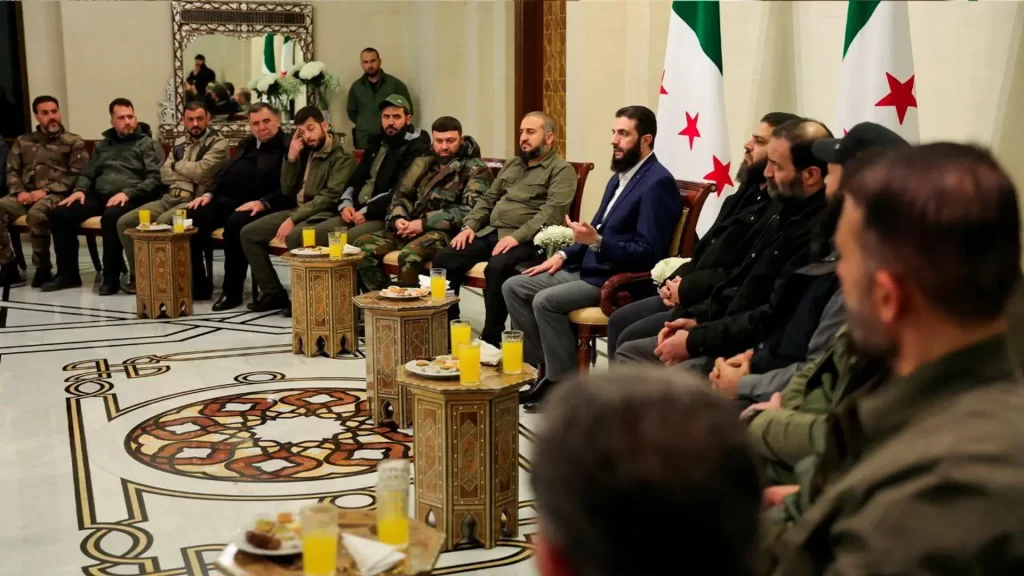
In December 2024, Syrian opposition forces successfully captured Damascus, leading to the ousting of long-term ruler President Bashar Al Assad and the establishment of a transitional government. On 29 January 2025, Ahmed Al Sharaa, the former leader of Hayat Tahrir al-Sham (HTS), the rebel group which led the military operation to topple the former president of Syria, was appointed as the president of the transitional period, with plans to form an interim legislative body.
In response to these developments, the European Union (EU) has cautiously agreed on a roadmap to lift sanctions imposed on Syria, contingent upon the actions of the new leadership. The EU aims to support Syria’s path to a peaceful political future that is inclusive of all minority groups and free from extremism. However, technical issues remain before any sanctions can be lifted, and a “snap back” mechanism is favoured to reimpose sanctions if the situation deteriorates.
Despite these international engagements, African countries have exhibited a notable hesitancy in responding to Syria’s political transition, adopting a reserved posture that reflects concerns over Syria’s internal volatility, the ideological leanings of the dominant political faction, and the absence of strong pre-existing bilateral ties. The restructuring of Syria’s security and economic frameworks presents an uncertain landscape, contributing to Africa’s reluctance to commit to any form of engagement until the political trajectory becomes clearer.
Algeria has maintained its historical alignment with sovereignty principles and non-interventionist policies, refraining from recognising or endorsing Syria’s transitional leadership. While it has long maintained ties with Syria under Assad’s administration, Algeria has avoided positioning itself either in favour or against the new authorities. Its reluctance is driven by concerns over the dominance of HTS, whose Islamist origins raise apprehensions about the ideological direction of Syria’s governance. Algeria’s foreign policy has traditionally opposed external interventions in sovereign countries, and the perception that Syria’s transition was largely driven by armed opposition factions rather than a negotiated political settlement reinforces its reluctance to engage.
Egypt has remained particularly apprehensive, largely due to its entrenched position against Islamist political movements. With HTS now playing a dominant role in Syria’s transition, Egyptian policymakers view the group’s governance ambitions with deep scepticism. Egyptian security and intelligence agencies have long considered Islamist movements to be a primary national security threat, and there is little political will in Egypt to engage with a Syrian administration that includes factions with such ideological roots. While Egypt maintains strong diplomatic and security ties with Gulf states that are actively shaping Syria’s political landscape, it has opted to observe rather than actively influence the transition. Egyptian officials have also expressed concerns over the potential spillover effects of Syria’s instability on broader Middle Eastern security dynamics, reinforcing a preference for a cautious approach.
Nigeria and Kenya, both grappling with transnational insurgencies linked to Islamic State (IS) factions, have not issued formal positions on Syria’s transition, reflecting their focus on domestic security concerns rather than engagement in Middle Eastern affairs. Nigerian security agencies are monitoring whether the transition in Syria will impact the movement of militants into the Sahel region but have not signalled any intent to engage with Syria’s new authorities. Kenya, which has dealt with cross-border threats from insurgent groups operating in East Africa, remains focused on intelligence-sharing with Western allies rather than broadening its security cooperation into Middle Eastern theatres. The assumption that Syria’s internal developments will remain geographically contained underpins the passive approach taken by both governments.
South Africa, often vocal on international governance and transitional justice, has not extended direct support to Syria’s new administration. While South Africa has historically advocated for negotiated political settlements in conflict zones, its foreign policy apparatus has shown little inclination to engage with Syria’s transitional government, particularly given the fragmented nature of power in the country. The coalition government has instead maintained its focus on broader multilateral diplomatic efforts, choosing not to take a definitive stance until Syria’s internal power structures become clearer.
The African Union (AU) has not issued any formal statements on Syria’s transition, reinforcing the continent’s collective reluctance to engage. The lack of an African bloc position reflects a broader pattern of disengagement from Middle Eastern affairs, particularly where governance transitions remain volatile. While individual African states maintain varying degrees of diplomatic and security cooperation with Middle Eastern actors, Syria’s transition has not been positioned as a strategic priority within the AU’s foreign policy agenda. The absence of a collective framework for engagement leaves African states to navigate the situation individually, further reinforcing a fragmented and hesitant approach.
Sierra Leone and Somalia, as rotating members of the UN Security Council, have aligned themselves with Algeria in expressing concerns over external support for Syria’s new authorities. These positions reflect broader hesitations within African diplomatic circles regarding the legitimacy and stability of Syria’s transition. The reluctance to engage is compounded by the fluidity of power structures in Syria, the continued presence of Assad-aligned factions, and the risk that external backers of the transition may recalibrate their positions if the new administration fails to consolidate power.
The absence of strong historical political and economic ties between Syria and African states further diminishes the urgency for African governments to engage. Unlike Gulf and European states, which have strategic interests in Syria’s political and economic recovery, African countries lack the immediate incentives to prioritise relations with the transitional government. Syria has not been a key economic partner for African states, and the weak trade and investment linkages mean there is little pressure on African governments to establish early diplomatic or economic commitments. The current preference among African states is to monitor developments while preserving flexibility for potential future engagement should Syria’s transition stabilise into a functional political order.
Implications
The assumption that Syria’s internal developments remain detached from African concerns is based on a narrow interpretation of geopolitical linkages, ignoring the secondary effects that the shift in the Syrian conflict will have on transnational militancy, diplomatic alignments, and external security partnerships. The removal of Assad’s administration alters the operational environment for militant networks, disrupts long-standing security balances, and reshapes how global actors allocate their resources, all of which have implications for Africa.
The transition of HTS from an international militant organisation into a more locally focused governing authority within Syria presents a structural shift that African governments have failed to account for in their counterinsurgency strategies. HTS, formerly aligned with Al Qaeda, has, over the years, distanced itself from transnational extremist networks and has prioritised establishing governance structures within northern Syria. This development could present a contrast to the operational patterns of Islamic State (IS) and Al Qaeda fighters, who maintain a decentralised, transnational insurgency model, including active cells in parts of Africa. While HTS has focused on consolidating political and military authority within Syria, IS fighters, especially, have increased their reliance on fragmented networks spread across multiple regions, including the Sahel, Lake Chad Basin, and Mozambique’s Cabo Delgado province. African governments have not explored whether engaging with locally oriented militant factions like HTS – under appropriate security conditions – could offer a model for separating domestic insurgencies from transnational extremism. The rigid classification of all non-state armed groups as identical threats has limited African governments’ ability to differentiate between localised militant governance structures and international insurgent networks, missing potential avenues for recalibrating counterinsurgency strategies.
The trajectory of HTS in Syria raises questions about whether other Al Qaeda-linked factions, like Jama’at Nusrat al-Islam wal-Muslimin (JNIM) in the Sahel, may attempt a similar transformation to gain political legitimacy and further entrench their territorial control. JNIM, which has expanded its influence across Mali, Burkina Faso, and Niger, has already established governance-like structures in certain areas, implementing judicial and administrative mechanisms that parallel state institutions. The group’s gradual shift toward localised rule and negotiations with regional actors suggests a strategic recalibration aimed at securing long-term authority rather than merely sustaining an insurgency. Unlike IS-affiliated factions, which rely on continuous military pressure and expansion, JNIM has increasingly engaged in dialogue with local communities, capitalising on grievances against central governments and weak state presence. If the HTS model in Syria gains broader international recognition, it could provide a precedent for JNIM to further separate itself from Al Qaeda’s global agenda, rebranding as a domestic political actor rather than a transnational militant entity. Such a shift would present a direct challenge to the legitimacy of Sahelian governments, which have struggled to assert control over contested territories. African states have not incorporated this potential evolution into their counterinsurgency frameworks, leaving them exposed to the possibility that militant governance structures could gain greater legitimacy, eroding state authority and reshaping the regional security order.
The displacement of foreign fighters, particularly those linked to IS factions, remains an unresolved issue that African governments have yet to integrate into their security calculations. The defeat of IS fighters in Iraq and Syria forced many fighters to relocate to Africa, where they integrated into pre-existing militant cells or established new operational hubs. The transition in Syria could generate a secondary wave of fighter displacement, particularly if IS-linked elements see fewer opportunities in Syria’s evolving power structure and instead seek operational environments where state security is weak. African intelligence agencies have not established dedicated tracking mechanisms for post-Syria militant movements, leaving governments in the Sahel and East Africa exposed to potential influxes of experienced insurgents. Nigeria, Chad, and Kenya, which have dealt with IS-affiliated groups in their respective regions, have not coordinated intelligence efforts to monitor whether shifts in Syria’s militant landscape will create recruitment corridors leading into Africa.
Russia’s recalibration following Syria’s transition introduces another set of security implications that African governments have not fully assessed. Russia’s extensive military presence in Syria had constrained its ability to expand certain operations in Africa, particularly in terms of resource allocation and strategic focus. With Syria’s internal landscape shifting, Russia may now have greater flexibility to reposition military assets and expand its influence in Africa, either through increased military contractor deployments or through deeper diplomatic entrenchment. The governments of Mali, Burkina Faso, and the Central African Republic, which have expanded military cooperation with Russian forces in recent years, have not evaluated whether Russia’s evolving Middle Eastern posture will strengthen or diminish its security commitments in Africa. If Russian forces previously stationed in Syria are redirected toward African conflict zones, this could alter the balance of local conflicts where Russian-backed forces are already engaged. Conversely, if Russia prioritises stabilising its foothold elsewhere in response to Syria’s transition, this could draw resources away from African operations, creating new security gaps for governments that have relied on Russian military partnerships.
The possible reallocation of Gulf investment or support funds priorities following Syria’s transition introduces an additional layer of indirect consequences that African governments have failed to account for. The Gulf states, which have been major investors in African infrastructure, agriculture, and energy projects, could now shift financial commitments toward Syria’s reconstruction and economic stabilisation efforts, even for a short period. African economies that have relied on Gulf-backed projects, including Ethiopia, Tanzania, Somalia and Senegal, have not established mechanisms to ensure continued investment flows despite shifting regional priorities. This lack of foresight could create financial constraints in long-term development plans, particularly if Gulf investment strategies reorient toward stabilising Syria at the expense of African projects. Governments that have built economic frameworks around sustained Gulf capital inflows have yet to articulate how they intend to safeguard these financial partnerships amidst changing regional investment priorities.
Opportunities
The political restructuring in Syria, while still in flux, presents a series of pragmatic opportunities for African states to engage in ways that align with their strategic interests without overextending diplomatically or financially. The transitional nature of Syria’s new government, the continued presence of Assad-aligned factions, and the fragmented role of armed groups make full-scale engagement premature. However, limited, well-calibrated cooperation—particularly in security, intelligence, diplomacy, and economic positioning—can create a foundation for future engagement if the transition stabilises into a functioning government. African states that position themselves early in targeted areas of cooperation will be better placed to influence long-term regional dynamics.
Security cooperation through intelligence-sharing and counterinsurgency coordination presents an immediate avenue for engagement. African states facing transnational insurgencies have a vested interest in tracking the movement of experienced militant fighters who may attempt to relocate from Syria into African conflict zones. Syria’s security apparatus, despite its fractured structure, retains deep intelligence capabilities on militant networks and their logistics, financing, and recruitment strategies. Engaging with Syria’s intelligence networks – through indirect channels or regional partners – can provide African states with actionable intelligence that strengthens counterterrorism operations at home. This does not require full diplomatic relations with Syria’s interim leadership but rather a pragmatic security dialogue that aligns with Africa’s interests in preventing further militant infiltration into its territories.
African states can also leverage diplomatic and soft power mechanisms to play a role in Syria’s post-conflict transition. South Africa, particularly, which has positioned itself as an international authority for transitional justice and reconciliation processes, can extend their expertise in post-conflict governance to Syria. While Africa’s direct influence over Syria’s political transition remains limited, engaging with international efforts to stabilise governance structures in Syria provides an opportunity to project African diplomatic influence on a broader scale. The AU, which has overseen transitional governance mechanisms in multiple African states, could position itself as a contributor to dialogue frameworks focused on political reconciliation and institution-building in Syria. This would allow Africa to establish diplomatic relevance in Syria’s transition without direct involvement in its internal power struggles.
Geopolitical positioning in trade and logistics presents another area where African states can capitalise on Syria’s transition without heavy political entanglements. Syria’s geographic position at the intersection of Europe, the Middle East, and Asia makes it strategically important for global trade flows, particularly maritime shipping and overland logistics routes. If the political transition leads to relative stability, Syria’s re-emergence as a regional transport hub could create new trade opportunities for African exporters seeking access to Middle Eastern and European markets. North African states, particularly Algeria and Egypt, could engage with Syria on maritime trade agreements that secure long-term access to logistics corridors linking the Mediterranean, Red Sea, and Gulf trade routes. African economies reliant on global shipping lanes, including South Africa and Kenya, could also benefit from a more stable Syrian transit corridor that reduces disruptions in trade flows.
The reconstruction phase in Syria presents an economic entry point for African countries with established infrastructure and engineering sectors. African firms operating in construction, energy, and logistics could position themselves as contractors in Syria’s rebuilding efforts. South African engineering firms, which have expanded into international markets, could explore opportunities in Syria’s industrial redevelopment. Governments that actively facilitate private-sector engagement in Syria’s reconstruction could secure long-term economic partnerships that extend beyond immediate rebuilding contracts.
Energy cooperation remains an area where African states can position themselves as long-term suppliers for a recovering Syrian economy. While Syria’s domestic energy infrastructure remains damaged, Gulf investors looking to stabilise Syria’s post-conflict energy supply may seek alternative import sources. Algeria, already a key natural gas exporter, could establish preliminary agreements to supply energy to Syria as part of broader Middle Eastern economic stabilisation efforts. Mauritania, which is developing its offshore gas reserves, could also explore long-term supply arrangements that integrate Syria into Africa’s growing energy export network. Early-stage engagement in energy trade discussions would allow African states to establish economic footholds in Syria’s rebuilding process without direct financial investments in its infrastructure.