
Executive Summary
The May 2025 conflict showed that Pakistan could respond to Indian strikes with sustained military action, ending the confrontation without a clear loss. India’s campaign exposed weaknesses in planning and coordination, and senior officials expressed concern over how the ceasefire was reached and announced. The decision to suspend the Indus Waters Treaty introduced a new source of pressure on Pakistan with no agreement to reverse it. China’s air defence systems proved effective in the field, raising doubts about India’s assumptions of technological advantage. Pakistan’s prior access to Rafale systems through joint training with Türkiye and Qatar added to Indian concerns over exposure. Middle Eastern governments avoided taking sides, reflecting their interest in preserving ties with both. The episode revealed new risks in the balance between the two states and left key sources of tension unresolved.
The India–Pakistan Conflict and its Enduring Fault Lines
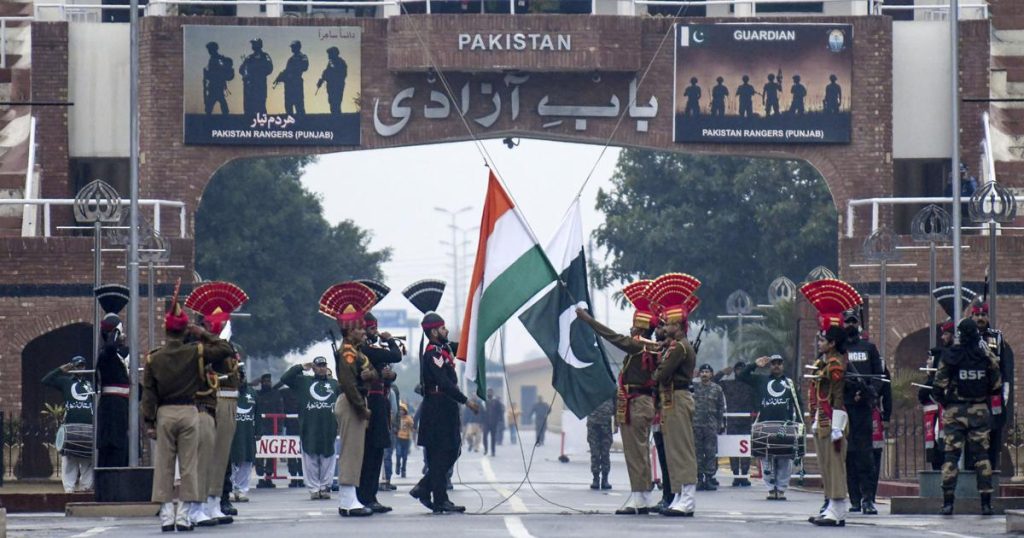
The May 2025 military escalation between India and Pakistan represented a critical inflexion point in the protracted hostilities between the two states. The immediate catalyst was a coordinated armed attack on 22 April in Indian-administered Kashmir, which resulted in substantial fatalities. India attributed responsibility to Pakistan-based armed groups, framing the incident as part of a sustained cross-border militant infrastructure supported by Islamabad. By 7 May, India initiated a series of extensive air and missile strikes on locations within Pakistan and Pakistan-administered Kashmir. Indian sources characterised these strikes as precision operations targeting militant facilities associated with the April attack.
Pakistan’s response was immediate and multi-dimensional. The Pakistan Air Force conducted retaliatory strikes against Indian military infrastructure, extending the scope of engagement beyond previous post-2000 conflict episodes. The Indian offensive, while publicly framed as counter-terrorism, expanded to include strategic military targets. Among the most notable was the deliberate targeting of the Noor Khan Airbase, situated in proximity to Pakistan’s nuclear command infrastructure. In total, India reported air and missile strikes against eleven Pakistani air force bases, a scale not observed since the Kargil conflict of 1999.
Pakistan’s counter-escalation was rapid, geographically expansive, and included strikes on at least twenty-six Indian military sites. These operations targeted missile depots, airbases, and logistical support centres. Pakistan also deployed drone swarms against major Indian cities, including New Delhi. This demonstrated a quantitative and geographical expansion in Pakistan’s conventional strike capabilities, projecting retaliatory reach into urban and strategic centres well beyond the Line of Control.
Operationally, Pakistan reported the downing of six Indian aircraft, including at least one Rafale fighter and one Mirage 2000. Islamabad attributed these outcomes primarily to the operational effectiveness of its Chinese-supplied J-10CE fighter aircraft and HQ-9 air defence systems. Pakistani military briefings highlighted the decisive role of air-to-air engagements in neutralising Indian assets, with particular emphasis on the engagement performance of the J-10CE against India’s more technologically advanced Rafale fleet.
From a strategic narrative perspective, Pakistan sought to frame the crisis as evidence of restored deterrence credibility. Despite the longstanding imbalance in conventional military capacity between the two states and India’s historical operational dominance in previous conflicts, Pakistan’s ability to absorb sustained strikes and deliver proportionate retaliation altered perceptions of its conventional deterrence posture. The framing of the ceasefire by Pakistan as both a diplomatic and military success reflected this recalibration.
Within India, official statements focused on demonstrating an updated threshold for military engagement and the political leadership’s readiness to escalate in response to cross-border attacks. Senior officials emphasised the revision of engagement protocols and the need to reinforce deterrence through visible punitive action. However, internal assessments revealed notable disquiet within the Indian military establishment regarding both the tactical outcomes and the abrupt transition to de-escalation.
The diplomatic management of the ceasefire became a particularly sensitive issue for New Delhi. The announcement by United States President Donald Trump on 10 May, positioning Washington as a central facilitator of the ceasefire agreement, was met with immediate rejection by Indian authorities. The Ministry of External Affairs issued formal statements denying any external mediation role, reiterating India’s position that Kashmir constitutes an internal sovereign matter and is not subject to third-party involvement. This reflected a broader strategic concern within India about setting precedents that could invite future international engagement on the Kashmir dispute.
Pakistan, by contrast, embraced the United States’ involvement. Islamabad interpreted Washington’s intervention as de facto recognition of the Kashmir issue as an international dispute requiring external facilitation. The Pakistani leadership sought to leverage this framing domestically and in international forums to reinforce long-standing demands for global engagement on Kashmir.
The motivations behind the United States’ intervention were shaped by broader geopolitical calculations. Washington’s strategic partnership with India as part of its Indo-Pacific framework, aimed at counterbalancing Chinese influence, rendered a prolonged South Asian conflict undesirable. Moreover, the potential economic disruption stemming from conflict between two nuclear-armed states risked undermining United States trade and supply chain diversification strategies. Additionally, United States policymakers remained cautious about any crisis trajectory that could accelerate Pakistan’s geopolitical dependence on China.
Beyond military and diplomatic dimensions, the escalation introduced a new layer of strategic risk centred on transboundary resource management. On 23 April, India suspended its participation in the Indus Waters Treaty, a bilateral framework governing water sharing since 1960. This decision, taken days after the Kashmir attack and prior to the military escalation, introduced a coercive dimension linked to critical resource flows. The absence of any reference to the treaty in the ceasefire agreement signalled that water remained a live point of leverage. India’s decision to halt water releases and indications of plans to increase upstream usage heightened Pakistani concerns over agricultural sustainability and national food security. The potential for water scarcity now constitutes a structural vulnerability for Pakistan and a strategic pressure point within the broader conflict spectrum.
The escalation also revealed important operational and technological lessons for both sides. Pakistani claims regarding the successful engagement of advanced Indian aircraft have prompted urgent technical reviews within Indian and French defence establishments. A central focus of these investigations concerns the potential impact of Chinese-supplied electronic warfare systems embedded within the J-10CE platform on the Rafale’s SPECTRA defensive suite. Any confirmation of such a vulnerability would undermine perceptions of the qualitative edge associated with Western-supplied combat systems.
Nevertheless, alternative assessments emerging within Indian defence circles suggest that these aircraft losses may have resulted primarily from operational shortcomings rather than platform inferiority. In particular, the failure to implement a comprehensive suppression of enemy air defences prior to launching strike operations represented a deviation from established air combat doctrine. This operational lapse likely exposed Indian aircraft to an integrated and ready Pakistani air defence posture, increasing vulnerability at predictable ingress points.
Further complicating the technical evaluation is the possibility that Pakistan’s recent defence cooperation with Middle Eastern states, particularly Türkiye and Qatar, may have provided indirect exposure to Rafale system characteristics. Pakistan’s participation in joint air exercises with these states allowed its pilots and technical personnel to observe Rafale performance profiles under realistic training conditions. While there is no confirmed evidence of formal intelligence transfer, Indian defence analysts remain alert to the possibility of unintended capability diffusion through such channels.
Diplomatically, Middle Eastern states maintained a position of calculated neutrality throughout the crisis. Despite long-standing security cooperation with Pakistan, particularly among select Gulf Cooperation Council members, economic interdependence with India has shaped a more restrained regional posture. Türkiye, while a consistent political advocate for Pakistan on Kashmir in multilateral forums, refrained from any direct involvement, likely reflecting Ankara’s focus on its own regional priorities and a desire to avoid additional geopolitical entanglements. Iran’s response was similarly calibrated. While maintaining its historical relationship with Pakistan, Tehran’s growing economic and infrastructure partnerships with India have introduced a degree of strategic balancing. Collectively, Middle Eastern actors appeared to judge that overt involvement in the India–Pakistan conflict would compromise broader political and economic interests with both sides.
The underlying fragility of the ceasefire remains evident. Pakistan’s assertive domestic messaging around deterrence success has raised public and political expectations regarding its future strategic posture. In India, both political leadership and senior military officials continue to express dissatisfaction with the tactical outcomes and with the external mediation dynamics that shaped the cessation of hostilities. The Indian president publicly characterised the ceasefire as a temporary suspension of operations, underscoring that the intended deterrence message had been delivered but also signalling that further military action remained a future option.
Post-conflict assessments within India’s defence establishment have already commenced, with attention focused on addressing both operational execution deficiencies and strategic communication weaknesses exposed during the escalation. The crisis has reinforced the structural volatility of the South Asian security environment. Pakistan’s demonstrated capacity for credible conventional retaliation, India’s recalibrated engagement thresholds, and the activation of water resources as a strategic lever collectively suggest that the underlying drivers of conflict remain unresolved. The 2025 escalation has introduced new variables into the India–Pakistan security equation, making future episodes of confrontation, whether intentional or inadvertent, increasingly likely within a complex and evolving regional context.