
Executive Summary
Armed drone proliferation has transformed from a marginal phenomenon into a defining feature of Africa’s contemporary armed conflicts. From the long-range strikes on Port Sudan in May 2025 to the tactical adaptation of commercial drones by insurgents in the Sahel, unmanned systems are reshaping how violence is projected, how sovereignty is contested, and how civilians experience conflict. Thirty-one African states now operate military drones, with multiple suppliers and growing domestic production capacities fuelling both state and non-state access. Yet, governance has not kept pace. Legal obligations under international humanitarian law remain under-enforced, export control regimes are uneven, and continental frameworks lack operational authority. The result is a rapidly normalising use of drone violence that lowers the threshold for armed action, enables proxy entrenchment, undermines restraint, and fragments accountability. Rather than stabilising conflict zones, drone proliferation is reinforcing volatility, accelerating cycles of harm, and redrawing the boundaries of power without resolving its underlying disputes.
In May 2025, a series of drone strikes hit Port Sudan, the temporary seat of the Sudanese government. The attacks, launched by the Rapid Support Forces (RSF) from bases in Darfur, involved long-range loitering munitions capable of travelling hundreds of kilometres. Their impact was not only material but symbolic: for the first time in the conflict, the RSF demonstrated the capacity to project force into the government’s core logistical and administrative zone. Satellite-confirmed launch platforms and open-source analysis linked the strikes to Chinese-designed delta-wing munitions, the deployment of which was neither publicly acknowledged nor formally declared. Coming in the wake of a failed drone assassination attempt on General Abdel Fattah al-Burhan in July 2024, the Port Sudan attacks revealed that drone warfare in Sudan had evolved from tactical support to strategic disruption.
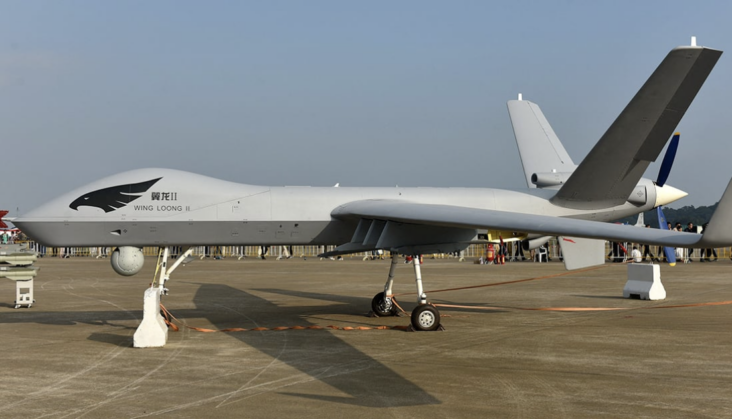
This transformation reflects a broader regional shift wherein armed drones have become central to the conduct of warfare across the African continent. 31 African states now operate drone systems for military use, up from barely a handful two decades ago. Since 2020, at least 15 bilateral drone acquisition agreements have been signed annually. These include packages of medium-altitude, long-endurance (MALE) combat drones, loitering munitions, surveillance platforms, and training infrastructure. Türkiye alone has concluded over thirty drone agreements in Africa, while China, Iran, Israel, and the United Arab Emirates (UAE) have also become major suppliers. The pace of acquisition has outstripped the development of oversight mechanisms. The integration of drones into active conflict zones has proceeded with limited transparency, constrained legal accountability, and no continental consensus on regulation.
In 2024 alone, 484 drone strikes were recorded across 13 African countries, resulting in an estimated 1,176 fatalities. These figures, compiled by civil society organisations and media investigations, reveal a considerable spike in both frequency and lethality. Sudan and the Sahel accounted for over 80 percent of these strikes, with documented use by both state and non-state actors. According to Drone Wars UK, at least 943 civilians were killed in 50 separate drone incidents between November 2021 and November 2024. In Ethiopia, over 490 civilians were reportedly killed in drone strikes in the Amhara region alone between 2023 and 2024. Such figures are likely conservative given the challenges of verification and access. What they reflect is a shift in the operational role of drones: from support assets to instruments of coercion with wide-area impact and minimal immediate risk to operators.
Conflicts in Libya and Ethiopia have already shown how drones can be tactically decisive. In 2020, Turkish-supplied Bayraktar TB2s enabled the Government of National Accord (GNA) in Libya to halt the Libyan National Army’s (LNA) offensive on Tripoli. This was one of the first drone-led battlefield reversals in a conventional African conflict. In Ethiopia, the Ethiopian National Defence Force (ENDF) deployed Turkish, Chinese, Emirati, and Iranian drones during the Tigray war to blunt and reverse the Tigray People’s Liberation Front’s (TPLF) advance. In both conflicts, drones were used to compensate for overstretched infantry, disrupt enemy supply lines, and strike key targets behind the front lines. However, in neither case did drones produce a strategic resolution. Libya remains politically divided, and Ethiopia’s ceasefire holds uneasily amid lingering regional tensions. These examples illustrate that while drones may shift battlefield momentum, they do not in themselves resolve political conflict.
In asymmetrical contexts, the role of drones is evolving in a different direction. In the Sahel, non-state actors such as Jama’at Nusrat al-Islam wal-Muslimin (JNIM) and Islamic State (IS) affiliates have begun integrating commercial drones into their operations. By 2024, these groups were conducting attacks using first-person-view (FPV) drones to drop improvised explosive devices (IEDs) on military outposts and convoys in Burkina Faso and Mali. These tactics are inexpensive, rapidly replicable, and require no formal command infrastructure. Their emergence marks a critical shift: the monopoly on drone-based strike capability, once confined to states and major armed forces, has been eroded. Insurgent drone use imitates state models and further develops its own logic of disruption, exploiting the very accessibility that makes commercial drones appealing to under-resourced governments.
The diffusion of drone technology has been accelerated by the entry of African states into the production cycle. Morocco has begun localised drone production through a joint venture with Israeli partners, while Ethiopia established SkyWin Aeronautics Industry in early 2025, aiming for partial self-sufficiency. Companies in Nigeria, Kenya, Tunisia, and Sudan are also entering the market. By mid-2025, African production accounted for approximately 12 percent of all drones used by African militaries, a figure expected to rise as cost barriers decline. This trend signals growing industrial autonomy and a likely expansion of intra-continental transfers outside the purview of conventional export regimes.
International humanitarian law (IHL) governs the use of force in armed conflict regardless of platform, requiring adherence to the principles of distinction, proportionality, and necessity. Yet, the operational realities of drone warfare challenge the effective application of these norms. The precision promised by drone strikes is often undermined by inadequate intelligence, compressed targeting timelines, and limited accountability. Incidents in Mali and Burkina Faso between 2023 and 2024 involved drone strikes on public gatherings, with state actors claiming legitimate targets but offering no post-strike assessments. The Arms Trade Treaty (ATT) obliges signatories to assess the risk of exported weapons being used to commit violations of IHL, but drones are not subject to any specialised provisions. The Missile Technology Control Regime (MTCR) and the Wassenaar Arrangement cover many drones and subsystems, yet they are voluntary and exclude many active suppliers. Within Africa, the African Union (AU) Peace and Security Council (PSC) has acknowledged the risks posed by drones in conflict zones but has not developed enforceable standards.
In essence, drones lower the threshold for the use of force by making strikes less politically risky for the user, particularly where domestic scrutiny is limited. They enable actors (both state and non-state) to bypass traditional battle lines and target adversaries deep in their territory, whether military or civilian. They incentivise external powers to shape African conflicts by supplying rival factions with tailored capabilities, fuelling proxy dynamics. They increase the speed and frequency of lethal engagements while decreasing the likelihood of accountability. Most critically, they decouple violence from presence: states and armed groups alike are able to project power without holding terrain, challenging conventional doctrines of control and legitimacy.
Drone proliferation in Africa has shifted from a pattern of acquisition to a state of normalisation. States see drones as flexible, affordable extensions of their security capacity; armed groups use them to offset asymmetries; suppliers deploy them to gain political and commercial leverage; and civilians increasingly experience them not as symbols of technological advancement but as instruments of fear and unpredictability. In the absence of robust oversight, effective export controls, or shared norms for accountability, drones are not stabilising African conflicts. They are amplifying their complexity, intensifying their reach, and embedding new layers of asymmetry and impunity into already fragile zones.